★ 4.9 · 600+ Google reviewsBy Yusof Izzat, Lead Pest Control Technician · Updated 19 June 2026 · 5 min read

Let’s clear this one up straight away, because it’s probably the most common mix-up we hear on the phone: white ants and termites are the same insect. “White ant” is just an old common name for a termite, and in Malaysia we call them semut putih or anai-anai. So there’s no contest between them — it’s one creature with two names. The twist is that despite the name, white ants aren’t actually ants at all. They’re far closer to cockroaches. And that one fact changes everything about how you deal with them.
The Short Answer: Same Insect, Two Names
There is no difference between a white ant and a termite. They are the same thing. “White ant” is simply the everyday name people gave termites long before anyone looked closely enough to realise termites belong to their own insect group entirely. Pest control people, scientists and your neighbour are all describing the same pale, wood-eating insect — anai-anai.
So if a contractor, a relative, or a property agent tells you “it’s only white ants, not termites,” don’t relax. That sentence is the same as saying “it’s only termites, not termites.” The name doesn’t soften the problem, and the problem is the part that quietly eats timber.
Why We Call Them Semut Putih
The nickname makes sense when you actually see them. The worker termites that do all the eating are soft, pale and creamy-white, and they move in long, busy lines along their mud trails — exactly the way ants march. Pale, small, marching in a column: white ant. The name wrote itself.
The reason it has stuck for generations is that you almost never see termites out in the open the way you see ants on your kitchen counter. They stay sealed inside wood or inside their mud tubes, so most people only ever glimpse them when a piece of timber breaks open — pale little insects spilling out, looking for all the world like white ants.
White Ants Aren’t Actually Ants
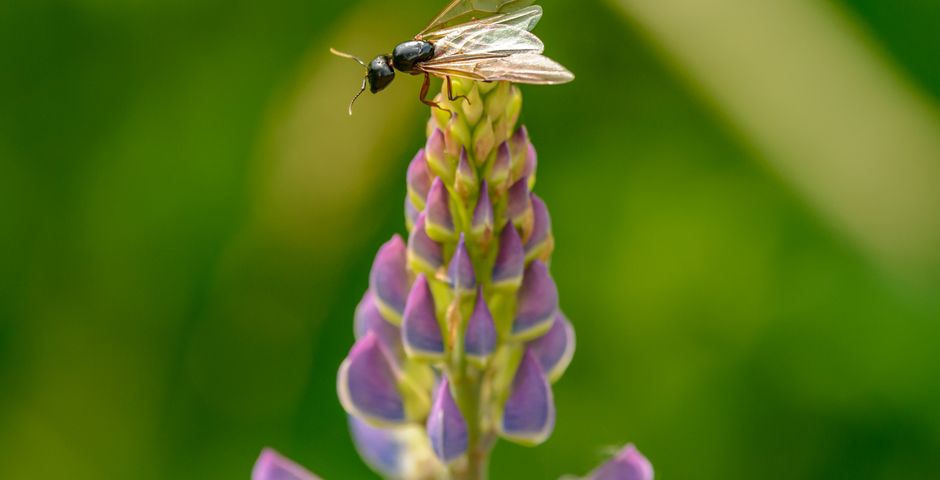
Here’s the part that surprises people: termites aren’t related to ants at all. They’re closer cousins of the cockroach. The resemblance is a coincidence — both are small social insects that live in colonies, but that’s where it ends. When you can get a close look (or a clear photo on your phone), three features tell them apart every time.
| Feature | Termite (white ant) | True ant |
|---|---|---|
| Waist | Straight, no pinch — one even shape | Narrow, clearly pinched waist |
| Antennae | Straight, like tiny beads in a line | Bent, with an obvious elbow |
| Wings (if flying) | 4 wings, all the same length | Front wings longer than the back pair |
| Colour | Pale, cream to light brown | Usually darker — black, brown, reddish |
| What they eat | Cellulose: wood, paper, cardboard | Food scraps, sugar, grease — not structural wood |
The diet row is the one that matters for your house. Real ants are a nuisance — they raid the kitchen and march across the counter. Termites eat the building. If you’re trying to work out which insect is actually on your counter versus in your skirting, our guide to the common kitchen ants in Malaysia covers the true-ant side.
The Termite Species That Matter Here

“White ant” covers more than one species, but in Malaysian homes two types do almost all the damage. Subterranean termites (mostly Coptotermes) live in a soil-based colony with a queen, build mud tubes up into your timber, and cause the overwhelming majority of structural damage. Drywood termites live entirely inside the wood they eat, need no soil contact, and leave little pellet droppings called frass.
Different species, but here’s the practical bit: the treatment doesn’t change because someone called them white ants instead of termites. It changes based on which species and how far they’ve spread. That’s what an inspection is for. A can of ant spray from the shop won’t touch either kind, because neither is an ant.
“Habis rosak perabot dekat rumah. Servis pest control anai anai (termites) delivered by Nomobug. Terima kasih.”
— Jihan Muse, actress. Whether you call them anai-anai, semut putih or termites, the furniture finds out the same way. The name never changes the damage.
How to Know You’ve Got Them

You’ll rarely catch white ants in the act — you’ll spot what they leave behind. The signs are the same whichever name you use for them:
- Mud tubes — pencil-thin lines of dried mud running up a wall, foundation or skirting. If you find one, don’t break it open; see our guide on what mud tubes mean and what to do.
- Hollow-sounding timber — tap a door frame or skirting and it sounds papery or empty.
- Discarded wings — small piles of equal-sized wings near windowsills after rain, shed by swarmers.
- Frass — fine pellet droppings, like coffee grounds, beneath drywood-infested wood.
- Rippled or bubbling paint — where they’ve eaten the surface from behind.
For the full rundown of the spots these get missed, our guide on where termites hide in a Malaysian home walks through the five most common ones.
What Treatment Costs
Because white ants are termites, you’re looking at termite treatment — which is priced separately from general pest control, and after an inspection confirms the species and spread.
| Treatment | How It Works | Typical Market Price (RM) |
|---|---|---|
| Baiting system | In-ground stations the colony feeds on until it collapses | 3,080 |
| Corrective soil treatment | Termiticide barrier injected around and under the structure | 3,960 |
| Pre-construction soil treatment | Barrier laid before a slab is poured (new builds) | 1,320 |