Quick answer: A co-working space has the pest risks of an ordinary office and none of the authority to fix them — you have members on monthly agreements, not staff who can be instructed. The three pressure points are the shared pantry nobody owns, soft breakout furniture that can harbour bed bugs brought in on bags, and 24-hour access that removes any closed window. Control is gel bait by zone with no closure needed, monthly service as a baseline, and enforceable rules written into the membership agreement rather than posted above the sink. See office pest control →
Ask a community manager what their pest control problem is and they will describe a pantry. Ask them why it has not been solved and you get the real answer, which is that they have asked politely four times and nobody who leaves the containers works for them. That is the whole distinction: a co-working space carries the pest risks of an ordinary office, but the operator has customers rather than employees — people on rolling monthly agreements who can be asked and not instructed, who come and go at three in the morning, and who bring their own food and their own bags into a space that belongs to nobody in particular. This guide covers the three pressure points specific to the sector, what community rules can actually enforce, and what a programme costs.
Why isn’t this just an office problem?
The pests are the same. The cockroaches behind the pantry cabinet in a co-working space in Bangsar behave exactly as they do in a corporate office in KL Sentral — we covered the standard office hotspots in our guide to office pest control in KL and Selangor.
What changes is everything around them:
- No employment relationship. An office manager can make “clear your desk and take your food home” a workplace rule. An operator can only make it a request, and the person ignoring it is paying you.
- No closed hours. Most spaces offer 24-hour access to at least some tiers, so there is no reliable empty window and no end-of-day reset.
- Constant turnover. New members every month, each arriving without any of the housekeeping context, and hot deskers who sit somewhere different each day.
- Soft furnishing everywhere. Sofas, upholstered booths, beanbags and fabric pods — materials a conventional office has far less of.
- Density. A pantry serving two hundred people generates food residue on a scale a thirty-person office does not.
- Immediate reputational exposure. Your customers sit in one room and talk to each other, and they can cancel next month.
The line that reframes the budget. In an office, pest control is a facilities cost. In a co-working space it is a retention cost, and it should be argued for in front of the person who owns churn rather than the person who owns the building.
Why does it always start in the pantry?
Because it is the only room in the building with continuous food and no owner.
A domestic kitchen has someone who is embarrassed by it. An office pantry has a cleaner and thirty people who know each other. A co-working pantry has two hundred members, a rotating cast of guests, and a shared fridge that functions as an archaeological record. Nobody is individually accountable for the container left overnight, so nothing is ever anybody’s to deal with.
That produces exactly the conditions German cockroaches (Blattella germanica) need — food residue renewed daily, moisture at the sink and coffee machine, warmth behind appliances, and cardboard from deliveries. They live in the voids: behind the fridge motor housing, inside the coffee machine base, in the cabinet hinges above the sink, under the water dispenser drip tray.
What actually works, in order of effect:
- A weekly fridge clear-out on a fixed, announced day. Everything unlabelled goes. This single rule does more than any treatment.
- A same-day rule on personal containers, enforced by the community team clearing what is left rather than by asking again.
- Waste out before the community team leaves, not in the morning.
- Deep clean behind and under appliances monthly. The fridge and coffee machine get pulled out, not wiped around.
- No cardboard stored in the pantry. Deliveries broken down and removed the same day.
- Gel bait into the voids, not spraying. An aerosol under the sink scatters the population into the next cabinet and undoes the baiting.
A co-working operator off Jalan Sultan Ismail called us after members started posting in the community channel about cockroaches in the pantry — which is the worst possible place for that conversation to happen, because everyone reads it. The population was in the fridge motor housing and the base of the coffee machine, neither of which had been moved in about two years. We baited both, plus the cabinet hinges and the dispenser tray, and the operator introduced a Friday fridge clear-out with everything unlabelled discarded. Activity was gone inside three weeks. The community manager told us later that the fridge rule caused more complaints in week one than the cockroaches ever had, and none by week three.
— Job notes, Nomobug field team
Can a co-working space get bed bugs?
Yes, and it is the risk most operators have never thought about — which is fair, because it is uncommon. It is worth knowing about anyway, because the consequences are out of proportion to the frequency.
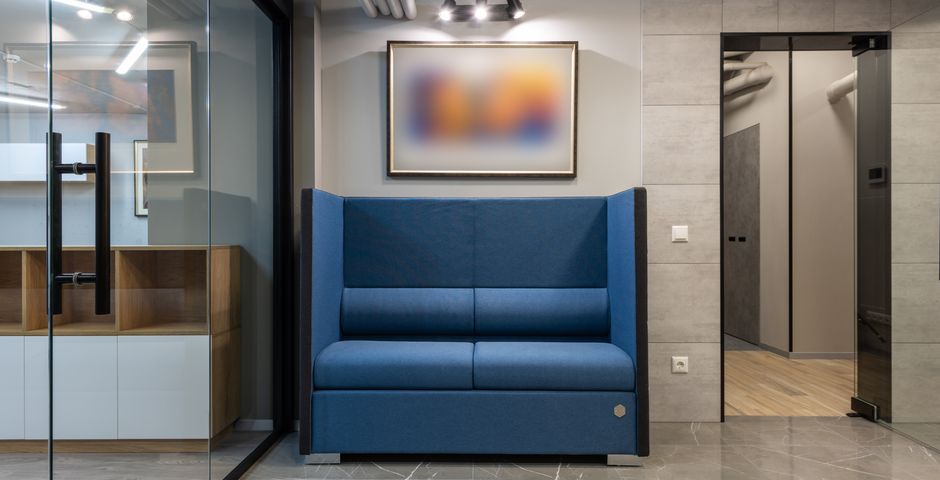
Bed bugs do not arrive because a space is dirty. They travel in bags, backpacks and clothing, and a co-working space combines two things they need: a high turnover of people arriving from many different places, and a lot of soft furnishing to hide in. Fabric sofas, upholstered booths, beanbags, fabric-lined phone pods and cushioned seating are all harbourage. The Malaysian species is the tropical bed bug, Cimex hemipterus, and in our climate eggs hatch in roughly 6 to 10 days.
Two practical notes. First, they are not a disease risk — the problem is bites, itching and the reaction people have to the word itself. Second, the treatment is not the same as cockroach work: it is a residual insecticide applied with detailed crack-and-crevice work into seams, frames and joints, never a gel bait, and it takes three visits over two weeks because a single treatment cannot reach eggs that have not yet hatched.
If it ever happens, act on the first credible report rather than waiting for a second. Isolate the item, do not move it through the space to a store room, and get it inspected. Our full guide is bed bug treatment in Malaysia — what to expect.
Which spots are specific to this layout?
Beyond the usual office suspects, a co-working floor has its own list:
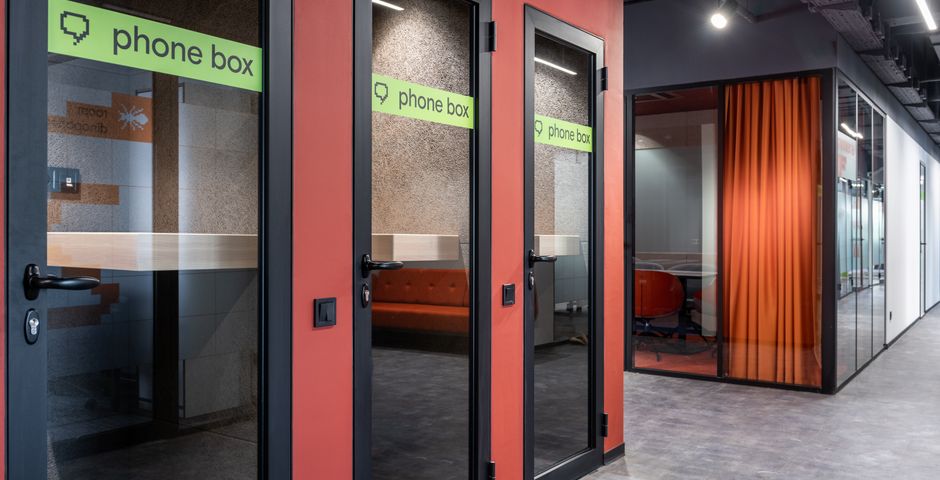
- Phone booths and focus pods. Enclosed, upholstered, warm, and cleaned far less often than the open floor because nobody can see inside them.
- Member lockers. Regularly used to store snacks, and occasionally to store snacks that were forgotten in March.
- Beanbags and soft seating. Rarely moved, and food is eaten on them constantly.
- Event and pantry catering waste. A launch event on Thursday evening leaves trays that sit until the morning shift arrives.
- Hot desk drawers and pedestals. Shared, unassigned, and therefore nobody’s to empty.
- The mailroom and parcel area. Members receive personal deliveries including food, and cardboard accumulates.
- Server and comms cupboards. Warm and undisturbed, as in any office.
- Shared risers and ceiling voids — the route from the F&B unit downstairs, and outside your control.
How do you treat a space that never closes?
The same way you treat any premises with no closed window: gel bait rather than spray, worked zone by zone.
Bait is placed into cracks, hinges, equipment voids and cabinet framing. Nothing is applied across open surfaces, so there is no fogging, no evacuation and no reason for anybody to stop working while a technician moves through a section of the floor. That matters more here than in a conventional office, because “we’re closing the floor for treatment” is a message that goes straight into a member community channel.
The pantry, bin area and any known hotspot are best done in the genuine overnight trough — usually somewhere between 2am and 6am — when even a 24-hour space is close to empty and appliances can be pulled out properly. Private offices and lockers need scheduled access agreed in advance, which is a membership agreement question rather than a pest control one.
One briefing note for the community team: bait draws cockroaches out of harbourage before the population collapses, so the first few days can look worse. Tell members that before the visit, in the same channel they would otherwise complain in. It converts a week of alarmed messages into a week of people reporting sightings usefully.
“Most importantly they used chemicals that are not dangerous to children! Would recommend this service especially for families”
— Yong Han Chung (Google review). A home, but it is the question a community manager gets asked within ten minutes of announcing a treatment. Gel bait placed inside voids is the answer worth being able to give: nothing sprayed across surfaces people touch, and the products used in food areas are HACCP-certified with Safety Data Sheets available if a member asks.
What can community rules actually enforce?
Whatever the membership agreement says. A laminated sign above the sink is not a rule, it is a suggestion with a border.
Terms that work in a Malaysian co-working space:
- A stated fridge clear-out day, with unlabelled items discarded. Announced, repeated, and actually carried out.
- Same-day personal food and containers. Anything left overnight is cleared by the community team, not chased.
- No food stored in lockers. Simple, checkable, and it removes an entire category of hidden harbourage.
- Event catering cleared the same evening, written into the event booking terms rather than left to the host.
- Technician access to lockers and private offices on scheduled service days, with notice.
- No member spraying. Somebody will otherwise buy an aerosol and undo the baiting programme with the best intentions.
The enforcement principle is the same one that works in food courts: members accept rules they can see the operator matching. Ask people to clear their containers while the fridge has not been emptied since Raya and you will get compliance on paper and nothing else.
Operator or building — who is responsible?
It splits, and the split should be in the tenancy rather than discovered during an infestation.
The building owner or management corporation covers the common areas — risers, ceiling voids above the demise, external perimeter, bin compound, drainage and the building fabric. No single tenant can treat any of that, and a co-working operator sitting above a restaurant has a source it cannot reach.
The operator covers everything inside its own demise: pantry, breakout furniture, private offices, lockers, its own waste discipline, and its own service records.
If activity keeps returning within weeks of every treatment despite good housekeeping inside the space, the source is outside your demise and the fix has to happen at building level. That conversation is a lot easier with dated service reports showing the pattern, which is the argument for keeping them properly — see pest control for property management companies in KL for how the building-wide side works.
What does one sighting cost you?
Disproportionately more than in a normal office, for a structural reason: in a co-working space, all of your customers are in the same room, and they have a group chat.
A cockroach crossing the hot desk floor at 3pm is witnessed simultaneously by dozens of people, several of whom will photograph it. It reaches the community channel before it reaches your community manager. And unlike an office tenant on a three-year lease who complains and stays, a co-working member is on a rolling monthly agreement — dissatisfaction converts to cancellation inside a billing cycle, and a departing member tells the next prospect.
Put a number on it in your own terms. One member on a mid-tier desk plan leaving early is a meaningful fraction of an annual pest programme. Three of them exceeds it. That framing is what gets this budget approved, and it belongs in front of whoever owns occupancy rather than whoever owns facilities.
What does it cost?
| Service | Typical market price | When it applies |
|---|---|---|
| Single visit | RM320 | Light, recent activity in one area |
| 3-visit intensive over 14 days | RM540 | An established pantry cockroach population |
| Annual programme, space under 2,000 sq ft | RM2,300 a year | Any operating co-working floor |
| Larger or multi-floor operators | Quoted per site | Member density, pantry count, soft furnishing |
For reference, Nomobug’s commercial pricing sits consistently around 10% below that typical market range — Annual Total Protection at RM2,090 a year for a premises below 2,000 sq ft, 15 visits (12 monthly plus 3 free), roughly RM139 a visit with dated reports included. A single visit is RM290 and the 3-visit intensive is RM490. Wider detail is in our commercial pest control price guide.
Bed bugs are priced separately and differently. If it ever happens, treatment is a three-visit programme over two weeks at RM2,000, or RM2,500 for a larger area or a heavier infestation, carrying a one-year warranty. That is not the cheapest quote you will be offered, and deliberately so — a single cheap spray cannot reach unhatched eggs, which is why the ones that come back cost more in the end. It is a programme, not a visit.



I’m giving him a 5-star rating.
Overall, from the last two visits, I found many spots/nests. The gel bait and Provcta were very impressive. The effect was very noticeable; the cockroaches were no longer visible in the kitchen. There were fewer in the living room. Today was my last visit for baiting and spraying. Hopefully, there will be no more cockroaches after this, God willing.
Highly recommended!



Nomobug has just completed their second service at my home, and once again I’m extremely impressed. They carried out contingency recurring control twice, especially targeting ants and cockroaches, and I really appreciate how they honor their warranty with such professionalism. The overall appointment scheduling and service management were smooth and reliable, which makes me feel very secure and well taken care of.
I’m very satisfied with the results and would highly recommend Nomobug to anyone looking for thorough pest control. Once my current contract finishes, I will definitely be renewing it.
It’s also worth highlighting that the same technician, Faris, has been consistently handling my house. He is punctual, polite, and highly professional. After completing the treatment, he provided a detailed report outlining his findings and preventive actions, even showing me examples of the control measures implemented. This level of transparency and care is rare, and I truly value it.
Overall, Nomobug continues to exceed my expectations—reliable, professional, and trustworthy.
4 MONTHS AGO:
I recently engaged Nomobug Servis Pest Control for a comprehensive treatment targeting cockroaches, ants, rats, common house geckos, and centipedes. They covered both the interior and exterior of my home—including my car—which was a huge plus.
The first service focused on prevention and control, and I was thoroughly impressed. The technician, Faris, was punctual, polite, and highly professional. He took the time to explain each step of the process—from inspection to recommending suitable control measures—and his work was exceptionally clean and tidy.
After completing the treatment, Faris provided a detailed report outlining his findings and the preventive actions taken and even showed me examples of the control measures implemented. I truly appreciated the transparency and care.
Overall, I’m very satisfied with their service and would confidently recommend Nomobug to anyone looking for reliable and thorough pest control.

Izzat handled it efficiently and professionally. Your quick response and technical skills really made the process smooth. Great teamwork and problem-solving!





Almost all places are sprayed.
Suggestions,
Hopefully the admin will send the same technician to work. Anyway, we are very satisfied with today’s service.
Thank you

We definitely add more services from them