Quick answer: In a hawker centre or food court, pests live in the shared systems — the drain runs, grease traps, bin bay and ceiling void — not inside any one stall. That is why treating a single unit rarely holds: German cockroaches (Blattella germanica) walk back in from the untreated stall two doors down within weeks. The fix is centre-wide: management treats the common areas fortnightly, every stall participates, and each gets its own service report for its licence file. Individual stall treatment starts at RM290. See cockroach pest control →

Every hawker centre in KL has the same conversation eventually. One stall gets fed up, pays for a treatment, and enjoys about three good weeks. Then the lipas are back, and the operator concludes that pest control does not work. It did work — the problem is that in a shared centre the pests do not live inside any single stall, they live in the drain runs, grease traps, bin bay and ceiling void that every stall shares, and treating one unit out of twelve is paying to clear a corridor that reopens the moment the technician drives off. This guide covers why shared premises behave differently, who is responsible for what, how you treat a centre that never really closes, and what it costs to do properly.
Why is a food court harder to treat than a restaurant?
A standalone restaurant owns its boundary. It has one kitchen, one back door, one bin bay, one drain run, and one person who decides what happens to all of them. Treat it properly and it stays treated, because everything the cockroaches need is inside a perimeter you control.
A stall in a centre controls almost none of that. Its ceiling is shared, its drain is shared, its rubbish goes to a shared point, and the partition between it and the next unit is usually a wall that stops well short of being pest-proof. Add the things that make a centre a centre — a dozen simultaneous food sources, trading hours that can run from 6am breakfast to 2am supper, high footfall, and constant deliveries — and you have a density of food, warmth and moisture that a single restaurant never reaches.
Two consequences follow. First, activity rebuilds faster, which is why fortnightly service is the sensible baseline in a busy centre against monthly for a single kitchen. Second, and more importantly, treatment only holds if it is comprehensive. A shared pest problem is consistently among the top reasons food courts get written up or shut down, and it is almost always traceable to the gap between what one tenant treated and what nobody did.
The uncomfortable arithmetic. In a twelve-stall centre, if eleven stalls treat properly and one does not, you do not have a centre that is 92% clear. You have a centre with a reservoir in it, and eleven operators who each think they wasted their money.
Which shared systems actually spread the pests?
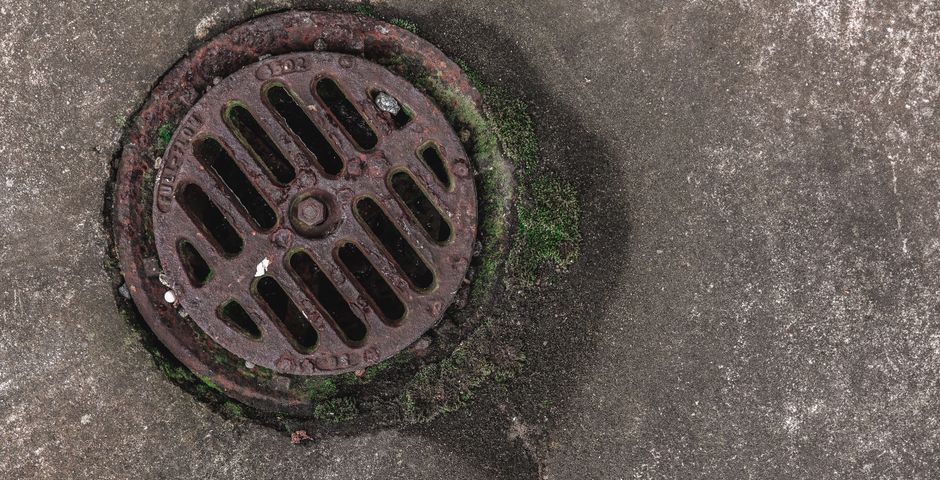
When we survey a centre, five things account for nearly all of it:
- The drain run and grease trap. The main highway. Cockroaches move along it between units, and it is where Rattus norvegicus comes up from. A grease trap that is not cleaned on a schedule is a permanent food source for both, plus flies. This is the single highest-value thing management can fix.
- The ceiling void. Usually continuous across the whole centre even when the stall partitions look solid. Rattus tanezumi, the Asian house rat, treats it as a corridor, and smear marks along a conduit run will tell you which units are on its route.
- The shared bin bay. One overflowing bin serves every stall’s pest population equally. Bin discipline is where the “not my rubbish” problem bites hardest, because the cost of one tenant’s laziness is spread across everybody.
- Pipe and conduit penetrations between units. The gap around a water pipe where it passes through a party wall is a door. Sealing them is cheap and almost never done.
- The shared store or corridor. Stacked cardboard is cockroach transport and cockroach housing at once, and in a centre it usually sits in a common area nobody has been told to clear.
Notice that four of those five sit outside any individual stall’s control. That is the whole argument for centre-level treatment in one list.
“I rented an apartment beside waste chamber, for 2 years being spraying consistently but to no avail. But this service clear the root problem by give bait to main points around the house so that even the little ones baited.”
— Afiq Zamanhuri (Google review). A home rather than a stall, but the lesson is exactly the food court lesson: when you sit next to a shared waste area, spraying your own space treats the symptom. The bait has to go where the population lives.
Who is responsible — management or the stall?
Legally, the duty to keep food premises free of pests sits under the Food Hygiene Regulations 2009, made under the Food Act 1983, and both the operator of the centre and the individual licensed stall carry obligations. Councils increasingly attach pest and rodent control conditions directly to food premises licences, so this is not a matter of goodwill.
Practically, the split that works looks like this:
| Area | Whose job | Why |
|---|---|---|
| Drain runs, grease traps | Management | No single tenant can treat them |
| Ceiling voids, external perimeter | Management | Continuous across the whole centre |
| Bin bay and waste collection schedule | Management | Shared facility, shared consequence |
| Building fabric, wall and pipe sealing | Management | Landlord’s structure, not tenant’s fit-out |
| Inside the stall, equipment voids | Stall operator | Own equipment, own harbourage |
| Daily waste, cardboard, food storage | Stall operator | Own housekeeping, own attractants |
| Stall’s own licence documentation | Stall operator | The licence is in their name |
Where centres fail is not usually disagreement — it is vagueness. If the tenancy agreement does not say who treats the drains, the honest answer is that nobody does, and every tenant assumes the other party has it covered. Write it down, and half the problem is solved before anyone opens a bait tube.
How do you treat a centre that never closes?
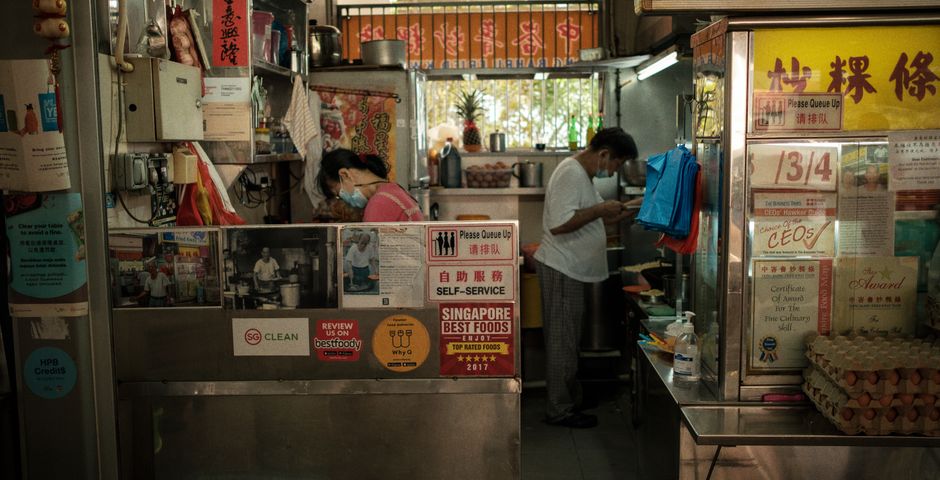
This is the objection every operator raises first, and it has a straightforward answer: you do not need the centre to close.
- Gel bait, not fogging. Bait goes into cracks, hinges and equipment voids. Nothing is sprayed across open surfaces, so there is no evacuation period and stalls keep trading through the visit.
- Zone by zone. The centre is worked in blocks — a section of stalls at a time — so the technician is never in the middle of a full service rush across the whole floor.
- Common areas at the edges of the day. Drains, grease traps, bin bay and ceiling voids are done early morning or after the last stall closes, when nobody is trading over them.
- The whole centre inside one window. This is the part that matters most. If the clearance drags over two months, the early stalls are being re-seeded by the late ones before you finish. Everything gets done inside the same short window or the exercise is pointless.
- Brief the tenants first. Bait draws cockroaches out of harbourage before it collapses the population, so the first week can look worse than before. Tell every stall that in advance, or you will spend the week fielding complaints that the treatment made things worse.
A food court in Cheras brought us in after two stalls had each paid for their own treatment twice in a year and got nowhere. The activity was coming from the shared drain channel behind the stall line and a grease trap that had not been emptied properly in months, plus a corridor where every tenant stacked their cardboard. We treated all fourteen units across four days, baited the drain run and ceiling void, put numbered rodent stations along the external wall, and got the operator to move waste collection an hour earlier. Activity across the centre was down to near zero at the six-week check. The two stalls that had been paying on their own now pay less and stay clear.
— Job notes, Nomobug field team
What does a centre-wide programme cover?
A proper centre programme is two layers running together — the common areas and the individual units — with one reporting trail that serves both.
- Common-area treatment. Drain runs and grease traps, bin bay, ceiling voids, service corridors and the external perimeter. Fortnightly in a busy centre.
- Numbered external rodent stations. Tamper-proof, locked, sited along the perimeter and mapped. Toxic rodent bait never goes inside food areas — inside, monitoring is non-toxic only.
- Insect monitors through the stall line. Numbered consistently so activity can be compared between units and hotspots identified rather than guessed at.
- Gel baiting inside participating stalls. Targeted BASF Provecta gel into hinges, equipment voids and cracks. HACCP-certified products, Safety Data Sheets on request.
- Proofing recommendations for the fabric. Mesh over drains, door sweeps, sealing the pipe penetrations between units. These are usually cheap and they are what stops the problem returning.
- Two-level reporting. One consolidated report for the operator showing activity by zone, plus an individual dated service report each stall can put in its own licence file. That second one matters — when an officer inspects a stall, the stall needs its own paperwork, not the landlord’s.
For the detail on what an inspecting officer actually looks for and how the grading works, see our guide to restaurant pest control and MOH compliance.
What can one stall do on its own?
Plenty, and it is worth doing even while you are trying to get management to act. You will not achieve a permanent fix alone, but you can make your unit a genuinely bad place to be:
- Seal your own penetrations. The gaps around your water pipes and cable runs where they pass into the party wall. A tube of sealant is the highest-return ringgit you will spend.
- Get the cardboard out daily. Unpack, break down, remove. Never store cartons overnight in the unit.
- Cap and mesh your own floor drain. Thirty ringgit, and it closes the most common rodent entry into a stall.
- Empty your bin before close, not in the morning. Overnight is when the shared bin bay does its recruiting.
- Gel bait your own equipment voids — and do not spray. A supermarket aerosol scatters the population into new voids and undoes any baiting happening around you. This is the fastest way to make a shared problem worse for everyone including yourself.
- Report activity to management in writing. Dated, specific, with a photo. It builds the record that eventually forces the common areas to be dealt with.
If activity comes back within a few weeks of every treatment despite all of that, you have your answer: the source is not in your unit, and no amount of spending inside your four walls will fix it. That is the moment to push for a centre-level programme.
How much does it cost?
Two different questions, depending on whether you are a stall or an operator.
| Service | Typical market price | Who it’s for |
|---|---|---|
| Single visit, one stall | RM320 | A stall with mild, recent activity |
| 3-visit intensive (14 days), one stall | RM540 | A stall clearing an established problem |
| Annual programme, premises under 2,000 sq ft | RM2,300 | A small centre or large single unit |
| Whole centre, fortnightly | Quoted by area and stall count | Operators and management corporations |
For reference, Nomobug’s commercial pricing sits consistently around 10% below that typical market range — a single stall visit from RM290, the 3-visit intensive at RM490, and the Annual Total Protection programme at RM2,090 a year for a premises below 2,000 sq ft. Full detail is in our commercial pest control price guide.
Whole centres are deliberately not on a fixed price list. A 6-stall medan selera and a 40-stall mall food court are different jobs with different drain layouts, and quoting either from a phone call would be guessing. Centres are quoted per site by floor area, stall count and risk after an inspection — which for commercial enquiries is free, and in this case genuinely necessary, because the point of the visit is finding which shared system is the reservoir.



I’m giving him a 5-star rating.
Overall, from the last two visits, I found many spots/nests. The gel bait and Provcta were very impressive. The effect was very noticeable; the cockroaches were no longer visible in the kitchen. There were fewer in the living room. Today was my last visit for baiting and spraying. Hopefully, there will be no more cockroaches after this, God willing.
Highly recommended!



Nomobug has just completed their second service at my home, and once again I’m extremely impressed. They carried out contingency recurring control twice, especially targeting ants and cockroaches, and I really appreciate how they honor their warranty with such professionalism. The overall appointment scheduling and service management were smooth and reliable, which makes me feel very secure and well taken care of.
I’m very satisfied with the results and would highly recommend Nomobug to anyone looking for thorough pest control. Once my current contract finishes, I will definitely be renewing it.
It’s also worth highlighting that the same technician, Faris, has been consistently handling my house. He is punctual, polite, and highly professional. After completing the treatment, he provided a detailed report outlining his findings and preventive actions, even showing me examples of the control measures implemented. This level of transparency and care is rare, and I truly value it.
Overall, Nomobug continues to exceed my expectations—reliable, professional, and trustworthy.
4 MONTHS AGO:
I recently engaged Nomobug Servis Pest Control for a comprehensive treatment targeting cockroaches, ants, rats, common house geckos, and centipedes. They covered both the interior and exterior of my home—including my car—which was a huge plus.
The first service focused on prevention and control, and I was thoroughly impressed. The technician, Faris, was punctual, polite, and highly professional. He took the time to explain each step of the process—from inspection to recommending suitable control measures—and his work was exceptionally clean and tidy.
After completing the treatment, Faris provided a detailed report outlining his findings and the preventive actions taken and even showed me examples of the control measures implemented. I truly appreciated the transparency and care.
Overall, I’m very satisfied with their service and would confidently recommend Nomobug to anyone looking for reliable and thorough pest control.

Izzat handled it efficiently and professionally. Your quick response and technical skills really made the process smooth. Great teamwork and problem-solving!





Almost all places are sprayed.
Suggestions,
Hopefully the admin will send the same technician to work. Anyway, we are very satisfied with today’s service.
Thank you

We definitely add more services from them