Quick answer: Malaysian restaurants must control pests under the Food Hygiene Regulations 2009, made under the Food Act 1983. Pest control carries only about 8% of your council hygiene grade — but a live cockroach or rat spotted during an inspection can trigger an immediate closure order under Section 11, whatever the rest of your score says. Monthly service with proper documentation is the working standard; Nomobug’s commercial programme runs RM2,090 a year for 15 visits. See commercial pest control →

Here is the number that surprises most restaurant owners: pest control is worth roughly 8% of your council hygiene grade — but a single live cockroach seen during a spot check can close your premises the same day. The percentage and the consequence do not match, and that mismatch is the whole story of restaurant pest compliance in Malaysia. You can score well on food safety, handler training, drainage and toilets, and still be shuttered because an officer watched something run under the prep bench. This guide covers what the law actually requires, how the A, B and C grades are scored, what MOH and council inspectors look for, how all of that differs from HACCP, and what a compliant programme costs.
What does Malaysian law require on pest control?
The governing instrument is the Food Hygiene Regulations 2009 (Peraturan-Peraturan Kebersihan Makanan 2009), made under the Food Act 1983. It does not tell you to sign a pest control contract, and it does not specify a visit frequency. What it does is put the duty on the premises owner and describe the outcome required.
In practical terms, four obligations sit on you:
- Keep pests out structurally. Walls, floors and ceilings in sound repair with no gaps or cracks that let pests in or give them somewhere to nest. Doors, windows and ventilation openings screened where they need to be.
- Handle waste so it does not feed them. Covered bins, regular removal, a clean bin bay. Most rodent and fly problems in a shoplot kitchen start at the back door, not the front.
- Keep food protected at every stage. Storage, preparation and display all have to be free of pest contact.
- Act without delay when there is a problem. Noticing activity and waiting until it becomes convenient is itself the breach.
Because the law describes an outcome rather than a method, the question at inspection is never “do you have a contract?” It is “is this premises under control, and can you show it?” A documented pest programme is simply the most straightforward way to answer yes to both halves.
How are restaurants graded for hygiene?

That A, B or C plaque on the wall comes from your local council, not from a national body — which is why the bands differ depending on where you trade. MBPJ has historically graded A at 75% and above, B between 50% and 75%, and C at 49% and below. Seberang Perai has used a stricter scale with A at 80% and above and a D band that means closure. Check your own council’s current criteria rather than assuming the numbers travel.
What does travel is the shape of the assessment. Premises are scored across roughly nine areas, weighted something like this:
| Assessment area | Approx. weight | Pest relevance |
|---|---|---|
| Food safety (storage, temperature, preparation) | 30% | Indirect — open food attracts activity |
| Food handlers (training, medical, hygiene) | 20% | Indirect — reporting sightings |
| Equipment and utensils | 10% | High — cockroaches nest inside equipment |
| Drainage and grease trap | 10% | High — the main rodent and fly route |
| Waste disposal | 10% | High — bins are the breeding source |
| Pest control | 8% | Direct — free of lipas, tikus, flies |
| Toilet facilities | 5% | Moderate — moisture and drains |
| Floors, walls, ceiling, ventilation | 5% | High — the gaps they enter through |
| Water supply | 2% | Low |
Read that table again and the real picture emerges. Pest control is scored at 8%, but drainage, waste, equipment and structure — another 30-odd per cent — are all essentially about whether pests can get in, get fed, and get comfortable. The pest section is the smallest part of your pest exposure.
Can one cockroach really close your restaurant?

Yes. Under Section 11 of the Food Act 1983, an authorised officer can order a food premises closed on the spot when conditions are judged unfit, and visible cockroach or rodent activity is one of the standard triggers. This is not a rare event. Enforcement sweeps run regularly across the states and routinely shut a batch of eateries at once — in one 2024 operation, 31 premises across Perak were ordered to close under the same section.
The follow-on penalties are the part people underestimate. Compound notices are issued for individual breaches, and continuing to operate in defiance of a closure order carries up to five years’ imprisonment, a fine, or both. Add the shutdown days, the deep clean, the reinspection, and the photo of your shopfront circulating on Facebook, and the arithmetic against a RM2,090 annual programme stops being close.
The bit worth internalising. Inspectors are not counting insects against a threshold. There is no allowance of two. One live cockroach on a prep surface is treated as evidence of a population you have not found, because that is exactly what it usually is.
What do inspectors actually look at?
Officers do not wander in and glance at the dining room. They go to the places activity shows up first, and they know where those are better than most operators do:
- Behind and under equipment. The motor housing of the chiller, the gap behind the tandoor or wok range, the underside of the prep bench. German cockroaches (Blattella germanica) nest in warm equipment voids, not in the open.
- The dry store. Gnaw marks on packaging, droppings along the skirting, torn sacks. Evidence counts even with nothing alive in sight.
- The back door and bin bay. Uncovered bins, standing grease, a gap under the door wide enough for Rattus norvegicus to walk through.
- Drains and the grease trap. The single most common rodent and fly route into a shoplot kitchen, and the one operators check least.
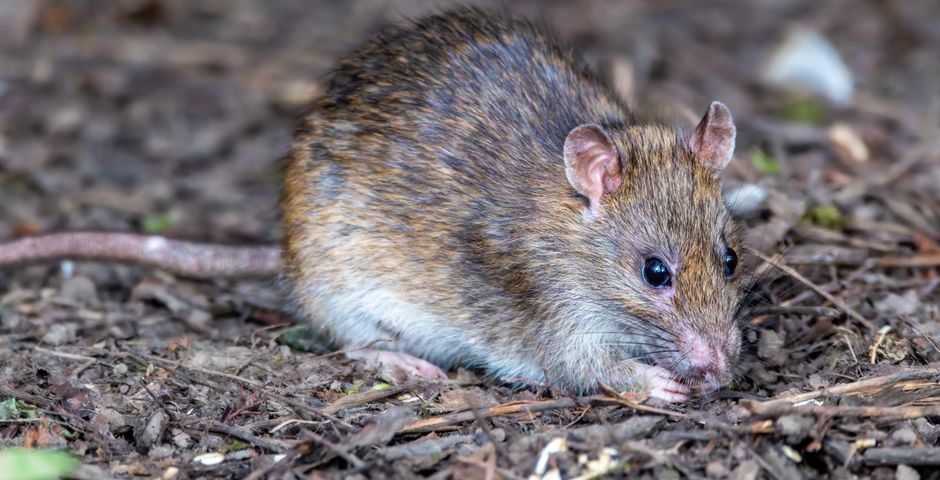
- Ceiling voids and pipe runs. Smear marks along a conduit are a rat highway, and Rattus tanezumi, the Asian house rat, is very much a ceiling animal.
- Fly units and their placement. A badly sited insectocutor directly above the prep line is a hazard, not a control measure.
Something that trips people up: pest evidence loses you points under the structural and waste sections too, not only under the 8% pest line. Droppings in the dry store are a pest finding and a storage finding at once. That is how a grade drops further than the owner expects.
A kopitiam in a Kepong shoplot row called us after dropping to a B on reinspection — rats coming up through an uncapped floor drain behind the wash area, plus cockroaches in the drinks station cabinetry. We meshed the drain, fitted a brush strip under the back door, gel-baited the cabinet voids and ran the three-visit intensive over two weeks. The rodent activity stopped after the second visit. They went back to an A at the next inspection, and the drain cap cost about RM30.
— Job notes, Nomobug field team
MOH compliance vs HACCP — what’s the difference?
These get conflated constantly, and treating them as the same thing leads operators to either over-buy or under-prepare.
- MOH and council compliance is mandatory. Every food premises in Malaysia is subject to it. It is enforced by inspection, compound notices, grading and closure powers. The test is largely about the state of your premises on the day.
- HACCP is voluntary certification. You pursue it because a buyer, mall, hotel group, franchisor or export market asks for it. Under HACCP, pest control becomes a documented prerequisite programme — service reports, a numbered station map, monitoring logs with trend analysis, corrective actions and Safety Data Sheets. The test is whether you can prove control across the whole year.
Put simply: MOH asks whether your kitchen is clean today. HACCP asks whether you can demonstrate it has been under control since last January. The good news is that the documentation built for the second satisfies the first comfortably — the file that passes a HACCP auditor answers an MOH officer’s questions without breaking a sweat. If certification is on your roadmap, our guides on HACCP certification and pest control in Malaysia and passing a HACCP audit as a KL restaurant cover the record set in detail.
What does a compliant programme look like?
A restaurant programme is built differently from a home visit — different tools, different placement, different reporting. The working shape of it:
- Gel baiting inside, not fogging. Targeted BASF Provecta gel at hinges, cracks and equipment voids collapses the cockroach harbourage without spraying anything across food-contact surfaces. Spray scatters a German cockroach population; bait removes it.
- Rodent bait outside only, in locked stations. Toxic bait belongs in tamper-proof external stations. Inside food areas, monitoring uses non-toxic devices. Loose rodenticide near food is an immediate finding.
- Proofing, not just treatment. Mesh over drains, brush strips under doors, sealing the conduit gaps. The RM30 fixes prevent the RM2,000 problems.
- Fly units placed away from open food — never directly above a prep line.
- Monthly service. It matches how fast a German cockroach population rebuilds in a warm kitchen, and it keeps a continuous record. High-pressure sites — back lanes, wet markets, shared drain risers — run fortnightly until the trend flattens.
- A dated report every visit. What was found, what was applied, what you need to fix. Keep them in one file; that file is your evidence of the “act without delay” duty.
The products used through all of this are HACCP-certified, which matters both to a food-safety consultant and to anyone asking what is being applied near their food. Safety Data Sheets are available on request.
“Its good to hear after all their inspection around the house and outside that they found my house to be at the top for being clean and hygienic.”
— Chef Wan (celebrity chef). Worth remembering when the auntie at table four asks why the pest control van is parked outside: booking pest control is what a well-run premises does, not an admission that something is wrong.
How much does restaurant pest control cost?
Klang Valley F&B programmes are generally priced by floor area, risk and visit frequency. Typical market ranges:
| Service | Typical market price | Suits |
|---|---|---|
| Single visit | RM320 | One-off treatment, no ongoing requirement |
| 3-visit intensive (14 days) | RM540 | Clearing active infestation before a reinspection |
| 6-visit programme | RM940 | Small, low-traffic premises |
| Annual programme (12+ visits, documented) | RM2,300 | Working kitchens, graded premises, certification |
For reference, Nomobug’s commercial pricing sits consistently around 10% below that typical market range — a single commercial visit from RM290, and the Annual Total Protection programme at RM2,090 for the year. The full breakdown is in our commercial pest control price guide.
Annual Total Protection
RM2,090 / year
15 service visits (12 monthly + 3 free) · about RM139 a visit
What the annual programme includes
- 15 visits for the price of 12 — around RM139 a visit.
- An intensive kickoff: 3 services in 14 days to clear anything active before your next inspection.
- Monthly service that keeps activity down and the record continuous.
- Documentation every visit — dated service reports, station map, monitoring logs, corrective actions, Safety Data Sheets.
- Food-safe, eco-friendly chemicals included as a free upgrade — HACCP-certified products, gel baiting rather than spray over food surfaces.
- Double dosage included for higher-pressure kitchens, at no extra cost.
- First service within 48 hours of confirmation — useful when you are holding a reinspection date.
- Flexible payment: upfront, or 3 interest-free payments with ATOME.
- Warranty-backed: free re-service between scheduled visits if a covered pest returns.
Premises above 2,000 sq ft and multi-outlet groups are quoted per site by area and risk. Commercial enquiries get a free site inspection before the quote, because a working kitchen genuinely cannot be scoped from a photo.
The mistakes that cost restaurants their grade
The failures we get called into repair are remarkably consistent, and almost none are about a lazy kitchen:
- Treating only when something is seen. By the time a German cockroach is visible in daylight, the harbourage is already crowded. Reactive spraying resets the clock; it does not stop it.
- Spraying instead of baiting. A pyrethroid spray scatters a cockroach population into new voids and makes the next round harder to find. This is the single most expensive DIY habit in F&B.
- An open back door in the evening. Convenient during service, and the reason your shoplot row shares a rodent problem.
- Ignoring the shared drain. Your neighbour’s kitchen and yours are connected. Treating only inside your four walls means re-infestation on a schedule.
- Cardboard stacked in the store. Delivery cartons are cockroach transport and cockroach housing at once. Unpack, break down, remove.
- No record of what was done. When an officer asks how you handled the last sighting, “we sprayed lah” is not an answer that closes the point.
When you don’t need a contract
An honest note, because we would rather not sell you something your situation doesn’t need. If you run a small stall or kopitiam, you are not chasing certification, no landlord clause requires documented pest management, and you are not currently seeing activity — you probably don’t need a 12-visit programme. Tight bin discipline, a capped floor drain, a screened back door and a one-off treatment when something actually appears will carry you.
Where the contract genuinely earns its money: shoplot rows with shared drains, kitchens running past midnight, premises chasing or holding a Grade A, anyone under a mall or franchise clause, and any kitchen where the same problem returns after every clean. That last one is the clearest signal of all — recurrence means there is a source you have not found, and finding sources is the part worth paying for.
Related reading
- HACCP pest control for KL restaurants — what an auditor checks, and the file you need on audit day.
- HACCP certification and pest control in Malaysia — MS 1480, prerequisite programmes and the certification timeline.
- Why cockroaches keep coming back after spraying — the bait-vs-spray reasoning behind a kitchen programme.
- Commercial pest control cost in Malaysia — full pricing for business premises.
- Nomobug general & commercial pest control — what a programme covers and how it is set up.
References
- Ministry of Health Malaysia — Food Act 1983 and Food Hygiene Regulations 2009 (Peraturan-Peraturan Kebersihan Makanan 2009) — moh.gov.my
- Food Act 1983 (Act 281), Section 11 — closure of unfit food premises — moh.gov.my
- Department of Agriculture Malaysia (Jabatan Pertanian) — registered pesticides database under the Pesticides Act 1974 — doa.gov.my
- Local authority food premises grading criteria — check your own council (MBPJ, DBKL, MBSA, MBSP), as bands and weightings differ.
- Species reference: German cockroach Blattella germanica, rats Rattus tanezumi / Rattus norvegicus, housefly Musca domestica.



I’m giving him a 5-star rating.
Overall, from the last two visits, I found many spots/nests. The gel bait and Provcta were very impressive. The effect was very noticeable; the cockroaches were no longer visible in the kitchen. There were fewer in the living room. Today was my last visit for baiting and spraying. Hopefully, there will be no more cockroaches after this, God willing.
Highly recommended!



Nomobug has just completed their second service at my home, and once again I’m extremely impressed. They carried out contingency recurring control twice, especially targeting ants and cockroaches, and I really appreciate how they honor their warranty with such professionalism. The overall appointment scheduling and service management were smooth and reliable, which makes me feel very secure and well taken care of.
I’m very satisfied with the results and would highly recommend Nomobug to anyone looking for thorough pest control. Once my current contract finishes, I will definitely be renewing it.
It’s also worth highlighting that the same technician, Faris, has been consistently handling my house. He is punctual, polite, and highly professional. After completing the treatment, he provided a detailed report outlining his findings and preventive actions, even showing me examples of the control measures implemented. This level of transparency and care is rare, and I truly value it.
Overall, Nomobug continues to exceed my expectations—reliable, professional, and trustworthy.
4 MONTHS AGO:
I recently engaged Nomobug Servis Pest Control for a comprehensive treatment targeting cockroaches, ants, rats, common house geckos, and centipedes. They covered both the interior and exterior of my home—including my car—which was a huge plus.
The first service focused on prevention and control, and I was thoroughly impressed. The technician, Faris, was punctual, polite, and highly professional. He took the time to explain each step of the process—from inspection to recommending suitable control measures—and his work was exceptionally clean and tidy.
After completing the treatment, Faris provided a detailed report outlining his findings and the preventive actions taken and even showed me examples of the control measures implemented. I truly appreciated the transparency and care.
Overall, I’m very satisfied with their service and would confidently recommend Nomobug to anyone looking for reliable and thorough pest control.

Izzat handled it efficiently and professionally. Your quick response and technical skills really made the process smooth. Great teamwork and problem-solving!





Almost all places are sprayed.
Suggestions,
Hopefully the admin will send the same technician to work. Anyway, we are very satisfied with today’s service.
Thank you

We definitely add more services from them