Quick answer: In a food processing plant, pest control stops being a service you buy and becomes a process you run. Four things carry it: zoning (toxic rodent bait outside only, monitoring-only inside production), threshold levels agreed in writing before anything is found, a corrective action loop that fixes the root cause rather than the sighting, and a document trail an auditor can follow. MeSTI — the Ministry of Health’s baseline scheme for processed food manufacturers — already requires records of a pest control contract, and GMP and HACCP build on top of it. See commercial pest control →
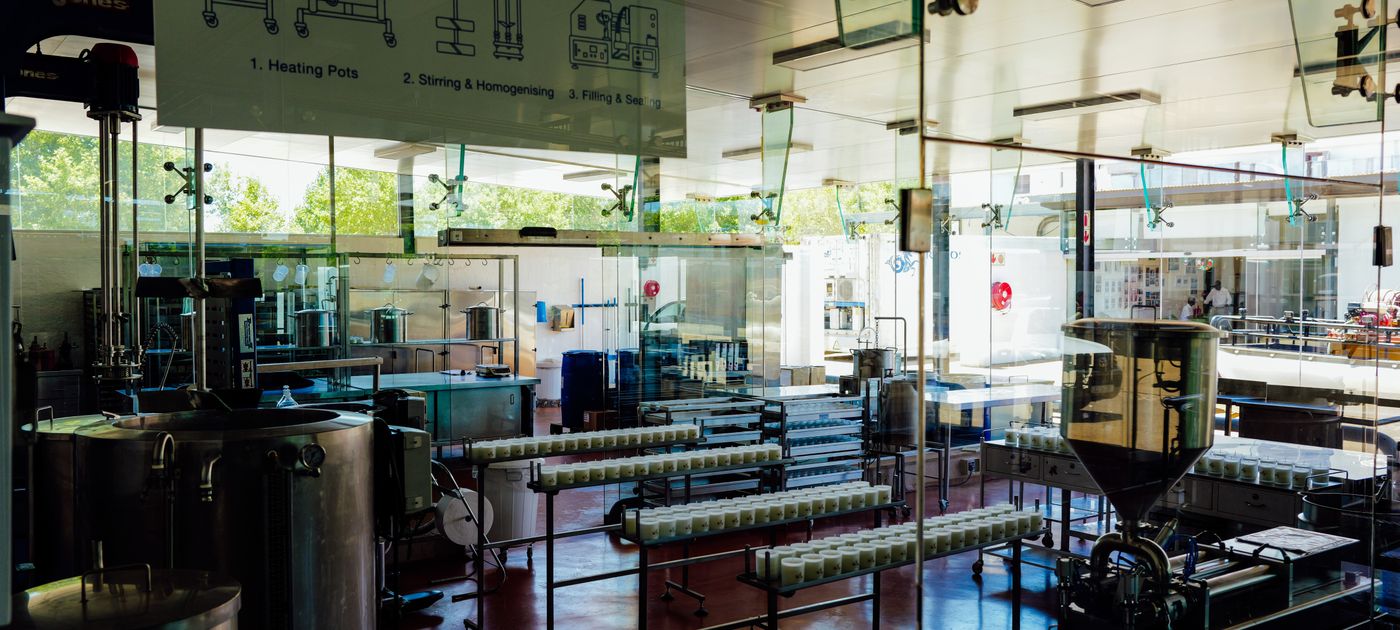
Plant managers usually arrive at this topic in one of two states. Either an auditor has just written up the pest programme and the folder turned out to be a stack of invoices, or a new customer has sent over a supplier questionnaire with fourteen questions nobody in the building can answer. The shift that solves both is the same one: in a food processing facility, pest control is not a treatment you schedule — it is a documented risk process, built on zoning, written threshold levels, root-cause corrective actions and an evidence trail, with the actual spraying being the smallest part of it. This guide covers what MeSTI and the GMP schemes require in Malaysia, how a plant is zoned, what thresholds do, which chemicals cannot go inside production, what happens the day something is found on the line, and what it costs.
How is a plant different from a warehouse?
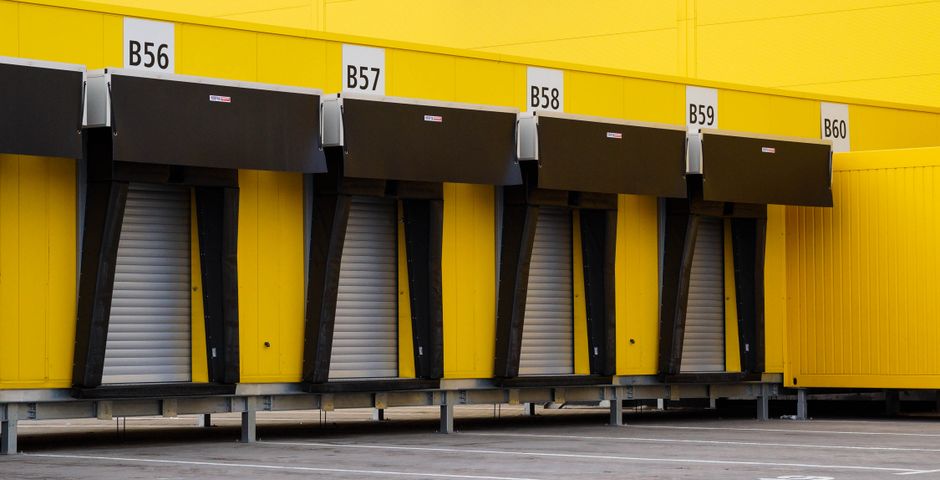
Worth settling first, because a lot of facilities are quoted as though they were the same building with different signage.
A warehouse protects sealed goods. The pest priorities there are exclusion at the loading bays, flying insect control, and stored-product pests already inside the cartons — we covered that in detail in our guide to warehouse and factory pest control. Keep things out, catch what flies in, check the stock.
A processing plant has all of that plus three problems a warehouse does not have. There is open product, so a single insect is a contamination event rather than a nuisance. There is wet cleaning, which means standing water, floor drains and humidity on a daily cycle. And there is warm equipment with voids in it — motor housings, hollow legs, control panels, conveyor frames — which is where a German cockroach (Blattella germanica) population will sit while the walls stay spotless.
The practical consequence is that a plant cannot rely on exclusion alone. It needs rules for what happens inside the building, and a way to prove those rules were followed. That is the whole of the rest of this article.
The reframe that makes audits easy. A warehouse asks “did anything get in?” A processing plant has to answer a harder question: “if something got in, would we know, would we know where from, and could we show you what we did about it?” Three of those are paperwork.
What does MeSTI actually require?
MeSTI — Makanan Selamat Tanggungjawab Industri — is the Ministry of Health’s baseline food safety certification for processed food manufacturers, sitting under the Food Hygiene Regulations 2009. For most Malaysian food producers it is the legal floor rather than a nice-to-have, and buyers increasingly ask for it before a purchase order.
Three parts of it land directly on pest management:
- A basic food safety plan with GMP and SOPs. Pest management is one of the prerequisite programmes inside that plan, which means it needs a written procedure, not just a contractor.
- Records of a contract with a pest control service. The contract itself is checked, and so is what sits behind it.
- Building condition and no signs of infestation. Walls, floors, ceilings and drains intact, cleanable, and clear. Much of what gets written up at inspection is fabric and drainage rather than insects.
A MeSTI certificate runs three years with annual surveillance, so the records have to survive over time. GMP and HACCP certification sit above MeSTI and ask the same questions in more detail — and if you are working toward HACCP specifically, our guide to HACCP certification and pest control in Malaysia covers that layer.
How do you zone a facility for pest risk?
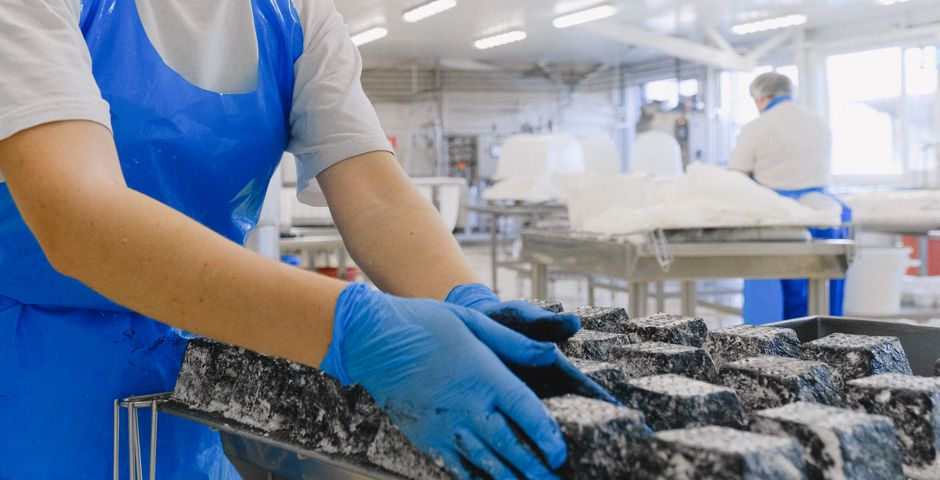
Zoning is the single idea that separates a plant programme from a shop programme. You divide the site into risk bands and apply different tools to each. Same building, four sets of rules.
| Zone | What goes there | The point |
|---|---|---|
| External perimeter | Numbered locked rodent stations with toxic bait; grounds kept clear | Intercept before the building |
| Building envelope | Door sweeps, strip curtains, mesh, sealed penetrations; internal non-toxic monitoring points | Exclusion, and proof of it |
| Non-production interior | Insect light traps, monitors, targeted crack-and-crevice gel where justified | Stores, corridors, staff areas, workshop |
| Production and high-care | Monitoring only, non-toxic; ILTs sited away from open product; no toxic bait | Detect, never contaminate |
Two placement rules inside that table cause most of the audit findings. Insect light traps must not be sited above or directly beside an open product line, because a unit that shatters an insect over the belt has turned a monitoring device into a contamination source. And every device — station, trap, monitor — carries a number that matches a site plan. An unnumbered device is, from an auditor’s point of view, a device that does not exist.
What are threshold levels, and why do auditors ask?
A threshold is the count at a given monitoring point above which you have to act, written down before anything is found.
Say monitor 14 by the packing hall door normally catches two or three flies a fortnight. You set the threshold at eight. When the report comes back at eleven, nobody has to argue about whether eleven is a lot — a rule was breached, an investigation opens, and it gets recorded. That is the entire value of the idea.
Auditors ask about thresholds because they separate a plant that is monitoring from one that is merely collecting. Without a threshold, catch data is a scrapbook: everyone can see the numbers, nobody is obliged to do anything, and the trend can climb for eight months without triggering a single action. With thresholds, the monthly report answers three questions in one line — what was caught, what the limit was, and what happened next.
The related habit is trend analysis. Counts by point, plotted over months, not just this visit’s total. Trends are how you catch a drain that has started breeding flies before anyone sees a fly in the product. A rising count at one numbered point over three visits is the single most useful thing a pest programme produces, and it only exists if the device numbering has been consistent.
What can’t be used inside production?
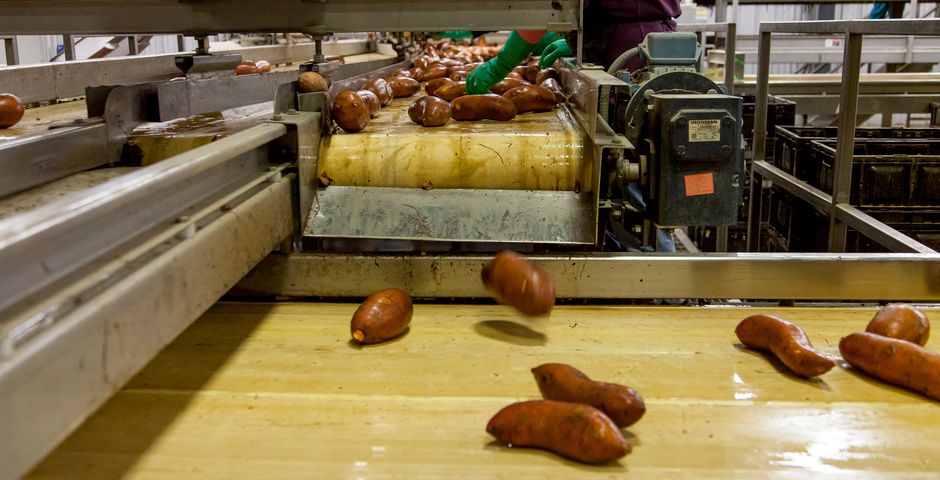
The rules here are simpler than people expect, and breaking them is the fastest way to turn a pest problem into a product problem.
- No toxic rodenticide inside the building. Poison belongs in locked, tamper-resistant, numbered stations on the external perimeter. Internally, rodent control is non-toxic monitoring — snap traps and monitoring blocks at numbered points, checked and logged every visit.
- No spraying over or near open product. Residual application is crack-and-crevice, into voids and harbourage, in non-production areas or during a full shutdown with lines covered and a documented release before restart.
- No fogging during a production run. Ever. If fogging is justified at all, it is a shutdown activity with a clean-down and sign-off afterwards.
- Gel bait placed inside voids, never on surfaces. Into hinges, frames and equipment cavities where the cockroaches actually are, and where nothing touches product.
- Every product documented. What was applied, where, how much, by whom, on what date, with Safety Data Sheets available on request. Nomobug uses HACCP-certified, food-safe products in food environments and the SDS goes out whenever it is asked for.
Notice that these restrictions push the work toward proofing, monitoring and housekeeping — which is exactly where it should be in a plant. If your programme’s answer to everything is a chemical, the zone rules will stop it, and probably should.
A small sauce and paste manufacturer in Shah Alam brought us in after a customer audit flagged their pest programme as “reactive”. Nothing was actually infested. What they had was a contractor visiting monthly, spraying the same perimeter walkway each time, and leaving a slip. No site plan, no numbered devices, no thresholds, nothing trended. We mapped the site into four zones, numbered 31 devices onto a drawing, set thresholds per point, and moved two insect light traps that had been mounted directly over the filling line. The findings that came out of the first three months were a cracked floor drain cover and a strip curtain missing half its blades — both fabric, neither chemical. The re-audit passed.
— Job notes, Nomobug field team
What happens when something is found on the line?
This is the question that decides your audit grade, and most sites answer it badly — they treat, and they move on.
The expected loop is six steps, and the record of the loop matters more than the speed of it:
- Contain. Isolate and hold any potentially affected product. Product disposition is decided by your food safety team, not by the pest technician.
- Record. Date, exact location, what was found, how many, photograph it. A vague entry is worth nothing three months later.
- Treat within the zone rules. Whatever is permitted for that zone, and nothing outside it because the situation feels urgent.
- Investigate the root cause. Not “a fly was found” but why a fly was there — a drain, a door propped open on hot afternoons, a delivery pallet, a ceiling void, a wash-down puddle that never dries.
- Close the gap. The physical or procedural fix. Mesh, seal, re-hang, reschedule the clean, retrain the shift.
- Verify. Confirm at the next visit or two that the count came down and stayed down, and record that verification.
An auditor reading that loop can tell in about ninety seconds whether a site manages pest risk or outsources it. The tell is step 4. If every corrective action in your log reads “treated area” and none of them names a cause, you have a treatment record, not a pest management system.
“Had experience with many companies before but doesn’t take too long the ants come again for like few weeks until i found them. Good service, effective and will consider to subscribe their service in future.”
— amir arshad (Google review). A house, not a plant, but it is step 4 in one sentence. The previous companies treated what was visible and it came back in weeks. Finding the source is the difference between a treatment and a closed corrective action.
What does an auditor open first?
Nearly always in this order:
- The site plan. Numbered device locations by zone. If the plan and the floor disagree, the audit gets slower and less friendly.
- Visit reports in date order. Dated, signed, showing what was inspected as well as what was treated.
- Trend analysis. Catches by numbered point over time. This is the document that most Malaysian SME plants simply do not have.
- The corrective action log. With root causes named and closure dates filled in. Open items from a year ago are worse than no log.
- Product list and Safety Data Sheets. Available on request, matching what the reports say was applied.
- The pest risk assessment. The document that justifies why you service monthly rather than fortnightly and why devices sit where they do.
That last one is the one to build first if you are starting from nothing, because every other document hangs off it. A folder of invoices is not a programme, and an auditor will say so in writing.
What does it cost?
| Site type | Typical market price | What drives it |
|---|---|---|
| Production kitchen or cottage manufacturer, under 2,000 sq ft | RM2,300 a year | Monthly schedule plus documentation |
| Small to mid plant with zoned production | Quoted per site | Floor area, zone count, device count |
| Fortnightly service, high-risk or wet processing | Roughly double the monthly line | Visit frequency |
| Proofing works (mesh, sweeps, strip curtains, drain covers) | One-off, usually a few hundred ringgit | Building fabric, quoted after survey |
For reference, Nomobug’s commercial pricing sits consistently around 10% below that typical market range — Annual Total Protection at RM2,090 a year for a premises below 2,000 sq ft, 15 visits (12 monthly plus 3 free), with the numbered device layout, dated reports and product documentation included. A single visit is RM290 and the 3-visit intensive over 14 days is RM490 if there is an active problem to clear first. The wider breakdown is in our commercial pest control price guide.
Anything with real production floor area is quoted per site, and deliberately so. Device layout, zone boundaries and visit frequency cannot be designed off a phone call — the site inspection, which is free for commercial enquiries, is where the actual programme gets drawn.



I’m giving him a 5-star rating.
Overall, from the last two visits, I found many spots/nests. The gel bait and Provcta were very impressive. The effect was very noticeable; the cockroaches were no longer visible in the kitchen. There were fewer in the living room. Today was my last visit for baiting and spraying. Hopefully, there will be no more cockroaches after this, God willing.
Highly recommended!



Nomobug has just completed their second service at my home, and once again I’m extremely impressed. They carried out contingency recurring control twice, especially targeting ants and cockroaches, and I really appreciate how they honor their warranty with such professionalism. The overall appointment scheduling and service management were smooth and reliable, which makes me feel very secure and well taken care of.
I’m very satisfied with the results and would highly recommend Nomobug to anyone looking for thorough pest control. Once my current contract finishes, I will definitely be renewing it.
It’s also worth highlighting that the same technician, Faris, has been consistently handling my house. He is punctual, polite, and highly professional. After completing the treatment, he provided a detailed report outlining his findings and preventive actions, even showing me examples of the control measures implemented. This level of transparency and care is rare, and I truly value it.
Overall, Nomobug continues to exceed my expectations—reliable, professional, and trustworthy.
4 MONTHS AGO:
I recently engaged Nomobug Servis Pest Control for a comprehensive treatment targeting cockroaches, ants, rats, common house geckos, and centipedes. They covered both the interior and exterior of my home—including my car—which was a huge plus.
The first service focused on prevention and control, and I was thoroughly impressed. The technician, Faris, was punctual, polite, and highly professional. He took the time to explain each step of the process—from inspection to recommending suitable control measures—and his work was exceptionally clean and tidy.
After completing the treatment, Faris provided a detailed report outlining his findings and the preventive actions taken and even showed me examples of the control measures implemented. I truly appreciated the transparency and care.
Overall, I’m very satisfied with their service and would confidently recommend Nomobug to anyone looking for reliable and thorough pest control.

Izzat handled it efficiently and professionally. Your quick response and technical skills really made the process smooth. Great teamwork and problem-solving!





Almost all places are sprayed.
Suggestions,
Hopefully the admin will send the same technician to work. Anyway, we are very satisfied with today’s service.
Thank you

We definitely add more services from them