Quick answer: Selangor councils licence food premises under the Food Establishment Licensing By-Laws 2007, and the health conditions attached to that licence require you to appoint a pest control company, service the premises at least monthly, and keep it free of cockroaches, flies and rodents. Several councils — MBPJ, MBSA, MBSJ and MPAJ among them — want a copy of the annual service contract and the treatment schedule on file. The four documents that matter are the contract, the schedule, a dated report for every visit, and the product list. Compliant cover for a small premises runs RM2,090 a year. See commercial pest control →

Most operators find out about the pest control clause the same way — at renewal, from a counter officer, with three weeks to sort it out. Nobody reads the health conditions attached to a lesen premis makanan when the shop is being fitted out. The short version is that Selangor councils require a licensed food premises to appoint a pest control company, service the premises at least once a month, and keep it free of cockroaches, flies and rodents — and several of them want a copy of the annual service contract and the treatment schedule submitted with the licence. This guide covers where that rule actually comes from, the four documents that satisfy it, what an officer looks at during the inspection, what happens when it goes wrong, and what compliance costs.
Where does the pest control rule actually come from?
There is no single “pest control law” for restaurants, which is exactly why it is confusing. Three layers stack on top of each other.
At the top is the Food Act 1983 and the Food Hygiene Regulations 2009, enforced by the Ministry of Health. This is the federal layer, and it is where the serious powers live — including the power to order a premises closed for up to 14 days when it is found in a condition likely to contaminate food.
Underneath that, your local authority licences the premises under the Food Establishment Licensing By-Laws 2007 (Undang-Undang Kecil Pelesenan Establisymen Makanan 2007), adopted across the Selangor councils. The licence is not a piece of paper you buy — it comes with a set of health conditions attached, and those conditions are the enforceable bit.
Third, the council’s own guideline document for licence applications lists what you have to produce. That is where pest control appears in black and white: appoint a pest control company, keep the premises free of cockroaches, flies and rodents, run a prevention treatment schedule, and in several councils submit a copy of the annual service contract with the application.
So the honest framing is this — pest control is not a law you can be prosecuted under directly. It is a condition of the licence, and the licence is the thing you can lose.
The distinction that catches people out. Nobody is going to fine you for not having a pest control contract. They are going to decline the renewal, and a restaurant without a current licence is not a restaurant with a problem — it is a restaurant that is closed.
What four documents does the council want?

Keep these in one physical folder at the premises, not on somebody’s phone. An officer standing in your kitchen is not going to wait while you WhatsApp your contractor.
- 1. The service contract. A signed agreement with one named pest control company, covering the licence period, with the scope and the frequency written into it. Several Selangor councils ask for a copy at application or renewal.
- 2. The prevention treatment schedule. The planned visit calendar for the year, and what is covered at each visit — internal treatment, drains, external rodent stations, monitors.
- 3. A dated service report for every visit. Date, technician, areas treated, products used, activity found, corrective actions recommended. This is the document that proves the contract is more than a subscription.
- 4. The product list. What was applied, with Safety Data Sheets available on request. Nomobug’s products for food premises are HACCP-certified and food-safe, and the SDS goes out whenever it is asked for.
Two useful extras that are not always demanded but always help: a numbered layout plan showing where the rodent stations and insect monitors sit, and a short log of what your own staff fixed after each report. The second one is the difference between a folder that says “we paid someone” and a folder that says “we manage this”.
How often do you have to be serviced?
At least once a month is the frequency Selangor councils generally set for licensed food premises. Treat that as a floor rather than a target.
Monthly is genuinely enough for a low-risk premises — a small café with packaged goods, a bakery counter, an office pantry operation. It is not enough for a kitchen with an active German cockroach (Blattella germanica) population, a shop sharing a drain run with six neighbours, or anything trading 20 hours a day. In those, fortnightly until the monitor counts are flat, then step down.
The compliance point is narrower than the pest control point though: whatever frequency you wrote on the schedule you submitted, the reports in the folder have to match it. A schedule that says monthly with five reports in it is worse than a schedule that honestly says quarterly with four.
Does it differ between MBPJ, MBSA, MPAJ and the rest?
The framework is the same across the Selangor local authorities — MBPJ (Petaling Jaya), MBSA (Shah Alam), MBSJ (Subang Jaya), MPAJ (Ampang Jaya), MPS (Selayang), MPKj (Kajang), MBDK (Klang) and MPSepang all licence food premises under the same by-law framework with broadly the same health conditions.
What differs is the admin: the application forms, the fee schedule, whether the contract copy is demanded upfront or only on request, and how the pre-licensing inspection is scheduled. MBSJ even publishes a list of pest control companies for operators who ask. The practical rule is to download your own council’s current guideline document rather than copying what your friend in the next town did two years ago — these get revised, and the copy circulating in the F&B WhatsApp group is usually out of date.
Beyond the licence, the other paperwork sitting in the same folder is the food handler training certificate and anti-typhoid vaccination record for every person who touches food. Those get checked at the same visit, so it is worth keeping them together.
What does the officer look at on the day?
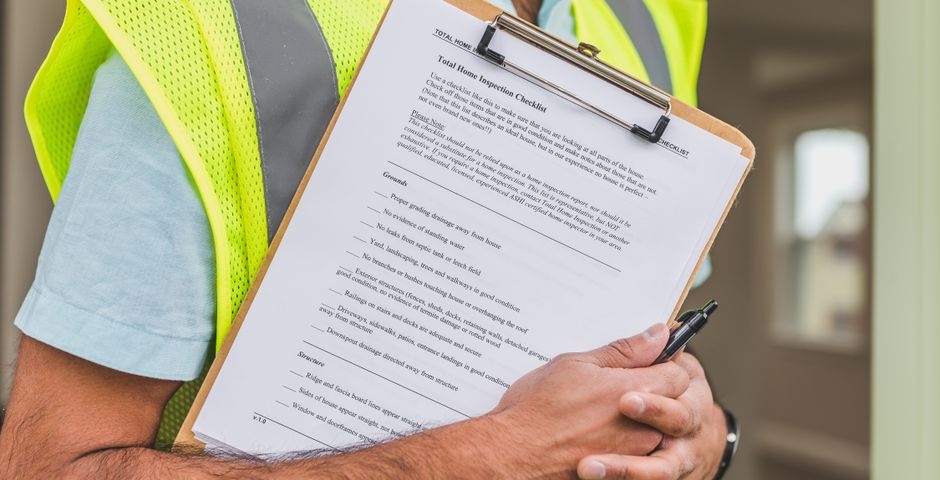
Two things at once: the file, and the premises. The file is quick. The premises is where it is decided.
- Live activity anywhere. A cockroach on the wall during the inspection outweighs any folder. Daytime activity in particular reads as an established population, not bad luck.
- Droppings and smear marks. Under the prep bench, along the skirting, on conduit runs in the store. Rodent smear marks are a hard finding because they are evidence of a route, not a visitor.
- The drain and grease trap. Uncovered floor drains, an unmeshed outlet, a grease trap that clearly has not been on a schedule.
- Gaps in the fabric. The back door with a 15mm gap under it, the unsealed pipe penetration behind the sink, the broken ceiling tile above the line.
- Food and waste storage. Open sacks on the floor, cardboard stacked in the dry store, bins without lids.
- Insect screens and covers. On windows, on the extract, over the bin area.
- The rodent stations and monitors. Present, numbered, and matching the layout plan in the file.
Notice how much of that is building work and housekeeping rather than chemical. That is the actual lesson of the licence inspection — the pest control contract is what proves you take it seriously, but the findings are almost always about proofing and waste discipline.
A café in Shah Alam called us three weeks before renewal after being told the file was incomplete. They had been paying a contractor for two years — the treatments were happening, the technician was competent, and there was not a single dated report anywhere in the shop. We ran a baseline visit, meshed two floor drains and fitted a door sweep on the back door, set up a monthly schedule with numbered monitors, and gave them the contract, the schedule and the first report in a folder. The renewal went through. Nothing about the pest situation had actually been wrong. The evidence had never existed.
— Job notes, Nomobug field team
Why do renewals get queried when a contract exists?
This is the most common call we get on this topic, and the answer is almost never that the pest control was bad. It is one of six paperwork failures:
- The contract lapsed. Signed two years ago, auto-assumed to be running, never renewed.
- The reports are undated or unsigned. A slip of paper with no date proves nothing at all.
- The frequency does not match. Schedule says monthly, folder holds four reports for the year.
- The reports live in the technician’s van. Or in an email account the current manager cannot access.
- The contract is in the old tenant’s name. Very common in a taken-over shoplot. So is the licence, sometimes.
- No corrective actions were ever closed out. Six reports all saying “seal gap under rear door” and a gap still under the rear door reads worse than no reports.
Fixing all six costs nothing except attention. Ask your contractor to leave a signed hard copy at the premises after every visit and put it in the folder before they drive away.
What happens if pests are found?
Faster and harder than most operators expect. The council can issue compounds under the food handling by-laws — MPAJ alone issued 259 compounds across 1,057 food premises inspected in the period up to November 2022. The Ministry of Health can order a closure of up to 14 days under the Food Act 1983 where a premises is in a state likely to contaminate food.
And the licence itself is on the table. In December 2022, MPAJ moved to cancel the licence of a Pandan Indah restaurant after a video of a rat feeding in a food warmer went viral, and said the premises would be sealed if it kept operating. MOH had already issued a 14-day closure order and six compounds. The detail worth sitting with: that same premises had been graded B at inspections in June 2021 and January 2022. A passing grade is a snapshot, not a shield.
The reputational layer is the one no council imposes and no contract covers. One clip is enough.
What does compliance cost?
| Option | Typical market price | Does it satisfy the licence condition? |
|---|---|---|
| Single visit, one-off | RM320 | No — no contract, no schedule |
| 3-visit intensive over 14 days | RM540 | Clears a problem, but it is not ongoing cover |
| Annual programme, premises under 2,000 sq ft | RM2,300 | Yes — contract, schedule and reports |
| Larger premises or multiple outlets | Quoted by area and outlet count | Yes, per site |
For reference, Nomobug’s commercial pricing sits consistently around 10% below that typical market range — a single visit from RM290, the 3-visit intensive at RM490, and Annual Total Protection at RM2,090 a year for a premises below 2,000 sq ft. That annual figure is 15 visits (12 monthly plus 3 free) with the contract, schedule and dated reports included, which works out to roughly RM139 a visit. The wider breakdown is in our commercial pest control price guide.
Put that against the alternative. A 14-day closure at a shop turning over RM3,000 a day is RM42,000 of lost trade, before you count the staff you still have to pay and the customers who quietly do not come back. The annual programme is roughly two days of that.
“I bought the RM490 package and they came 3 times over the period of 3 months. Now my house has no more cockroaches at all! I am so impressed.”
— Isma Dasiuk (Google review). A home rather than a shop, but it is the same structure the licence condition is built around: repeat visits on a schedule, not one heroic spray. The council is asking for evidence of exactly that pattern.



I’m giving him a 5-star rating.
Overall, from the last two visits, I found many spots/nests. The gel bait and Provcta were very impressive. The effect was very noticeable; the cockroaches were no longer visible in the kitchen. There were fewer in the living room. Today was my last visit for baiting and spraying. Hopefully, there will be no more cockroaches after this, God willing.
Highly recommended!



Nomobug has just completed their second service at my home, and once again I’m extremely impressed. They carried out contingency recurring control twice, especially targeting ants and cockroaches, and I really appreciate how they honor their warranty with such professionalism. The overall appointment scheduling and service management were smooth and reliable, which makes me feel very secure and well taken care of.
I’m very satisfied with the results and would highly recommend Nomobug to anyone looking for thorough pest control. Once my current contract finishes, I will definitely be renewing it.
It’s also worth highlighting that the same technician, Faris, has been consistently handling my house. He is punctual, polite, and highly professional. After completing the treatment, he provided a detailed report outlining his findings and preventive actions, even showing me examples of the control measures implemented. This level of transparency and care is rare, and I truly value it.
Overall, Nomobug continues to exceed my expectations—reliable, professional, and trustworthy.
4 MONTHS AGO:
I recently engaged Nomobug Servis Pest Control for a comprehensive treatment targeting cockroaches, ants, rats, common house geckos, and centipedes. They covered both the interior and exterior of my home—including my car—which was a huge plus.
The first service focused on prevention and control, and I was thoroughly impressed. The technician, Faris, was punctual, polite, and highly professional. He took the time to explain each step of the process—from inspection to recommending suitable control measures—and his work was exceptionally clean and tidy.
After completing the treatment, Faris provided a detailed report outlining his findings and the preventive actions taken and even showed me examples of the control measures implemented. I truly appreciated the transparency and care.
Overall, I’m very satisfied with their service and would confidently recommend Nomobug to anyone looking for reliable and thorough pest control.

Izzat handled it efficiently and professionally. Your quick response and technical skills really made the process smooth. Great teamwork and problem-solving!





Almost all places are sprayed.
Suggestions,
Hopefully the admin will send the same technician to work. Anyway, we are very satisfied with today’s service.
Thank you

We definitely add more services from them