Quick answer: A clinic can’t tolerate a single pest — patients are vulnerable, and pest activity found during an MSQH or JCI survey becomes a formal Requirement for Improvement. The signature medical pest is the pharaoh ant (Monomorium pharaonis), which enters wounds and IV ports and must be baited, never sprayed (spraying splits the colony). Treatment uses low-toxicity, targeted products around clinic hours, with the documentation accreditation demands. See our commercial services →
A pest in an office is embarrassing. A pest in a clinic is a patient-safety and licensing problem. Cockroaches, ants, flies, and rodents all carry pathogens that are genuinely dangerous to sick and immunocompromised patients — and any pest activity a surveyor finds during accreditation becomes a formal citation that can hold up your MSQH renewal. That’s why healthcare pest control is its own discipline: infection-safe, low-toxicity, documented to accreditation standard, and built around one pest most people have never heard of but every hospital fears — the pharaoh ant. Here’s what a clinic or medical centre in Malaysia actually needs.
Why is pest control critical in a clinic?
Two reasons, and both are serious. The first is patient safety. Cockroaches and rodents mechanically carry pathogens — Salmonella, E. coli, Leptospira — from drains and waste onto surfaces. In a home that’s unpleasant; in a facility full of open wounds, IV lines, and immunocompromised patients, it’s a genuine infection risk.
The second is accreditation. An active, documented pest management programme is a standing requirement of MSQH (Malaysian Society for Quality in Health) and JCI accreditation, and of MOH licensing under the Private Healthcare Facilities and Services Act. Live pest activity during a survey is recorded as a Requirement for Improvement — a formal citation that can delay or jeopardise your accreditation renewal. So the programme protects two things at once: the patients, and the licence to treat them.
The pests that threaten a medical facility
A medical facility has a distinct pest profile — the same species as anywhere, but ranked by the harm they do to patients:
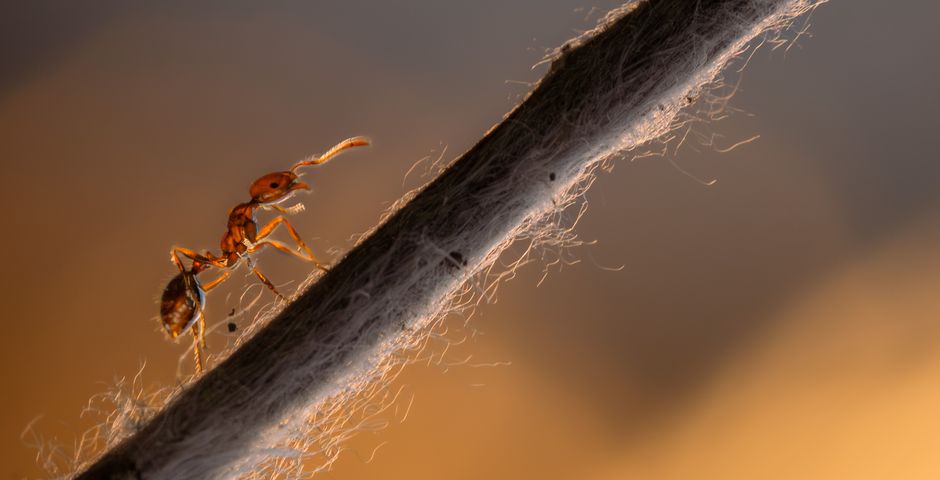
- Pharaoh ants (Monomorium pharaonis). The signature healthcare pest. Tiny, pale, and drawn to protein and moisture, they trail into wounds, IV ports, sterile dressings, and supply stores — a recognised healthcare-associated infection risk. Their own section below.
- German cockroaches (Blattella germanica). Around pantries, sluice rooms, drains, and equipment voids, carrying bacteria onto surfaces. A cockroach in a treatment room is an infection-control failure.
- Houseflies (Musca domestica). Mechanical vectors that move between clinical waste and treatment areas. Controlled with insect light traps placed away from patient and sterile zones.
- Rats (Rattus norvegicus). From drains and the clinical-waste store, carrying Leptospira and gnawing cabling. A serious back-of-house risk.
Why you can’t spray pharaoh ants
Pharaoh ants deserve their own section because they are the pest that most often defeats a clinic, and the one where the instinctive response — reach for the spray — makes it dramatically worse.
Here’s the biology. A pharaoh ant colony isn’t one nest with one queen; it has many queens and reproduces by budding. When you spray a trail, you don’t kill the colony — you stress it, and it responds by splitting: groups of workers and queens break away and start new nests, deeper into the wall voids, ceiling, and service ducts of the building. Spray one trail and you can turn a single nest into five, now scattered across the facility and closer to the wards.
The only thing that works is baiting. A slow-acting bait matched to what they’re feeding on gets carried back and shared with the queens, collapsing the whole interconnected colony over a couple of weeks. It’s patient, it’s targeted, and it’s the opposite of a spray. The same colony-splitting logic is why spraying ants at home usually backfires — in a clinic, the stakes are just far higher.
A medical centre in Petaling Jaya had pharaoh ants trailing into the dressing room and pharmacy weeks before an accreditation surveillance visit. The previous contractor had sprayed, which had scattered them into three separate wall voids. We switched entirely to baiting at the trails and harbourage points, held off all spray, and had the colony collapsed inside two weeks — clean for the survey.
— Job notes, Nomobug field team
Which chemicals are safe around patients?
The governing rule in a clinic is targeted, low-toxicity, and never airborne. There is no fogging and no broadcast spraying in patient, lab, or pharmacy areas — the risk of residue on equipment, medicines, and surfaces that patients and staff touch is unacceptable. Instead the work is done with:
- Gel baiting placed precisely into cracks, hinges, and voids where pests harbour — nothing on open surfaces.
- Non-toxic monitoring devices inside sensitive zones, so activity is tracked without chemical near patients.
- Targeted residual only in appropriate back-of-house areas, kept well away from sterile fields and equipment.
- Insect light traps for flies, positioned away from treatment and open-medication areas.
Nomobug uses HACCP-certified products suited to occupied, hygiene-critical environments, with a Safety Data Sheet on file for every one — the same evidence an infection-control committee will want to see.
How is a clinic treated without disruption?
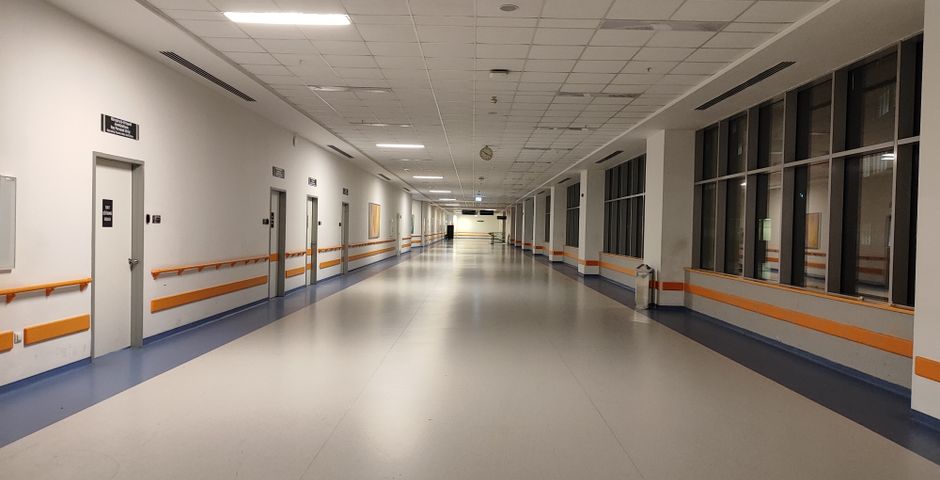
A clinic can’t pause patient care for pest control, so the programme works around the operation and by zone:
- Scheduled around clinic hours. Treatment during closed hours or quiet periods, so patients and consultations are never affected.
- Zone by zone. Pharmacy, consultation and treatment rooms, labs, pantry, and the clinical-waste store are each handled to their own standard — the waste store and drains get the most attention, the sterile areas the lightest touch.
- Targeted, not broadcast. Products go into cracks and voids, never across a room, so nothing lands on equipment or contact surfaces.
- Documented as you go. Every visit produces the report and monitoring log your infection-control and accreditation files need.
What documentation does accreditation require?
MSQH and JCI surveyors, and MOH officers under the Private Healthcare Facilities and Services Act, all expect the same thing: evidence of an active, controlled pest management programme, kept in real time. The file should contain:
- A documented service contract — scope, pests covered, visit frequency.
- Dated, signed service reports for every visit.
- A numbered site map of every bait station, monitor, and fly unit.
- Monitoring logs with trend analysis, showing activity flat or falling.
- Corrective-action records — what was found, what was done, whether it worked.
- Safety Data Sheets for every product used on site.
Surveyors check the records were kept as you went, not assembled the week before the survey — a backfilled-looking file does more harm than an honest gap. It’s the same evidence standard we cover for kitchens in the restaurant HACCP guide; the healthcare version simply has stricter zones and a lower tolerance for any activity at all.
How much does clinic pest control cost?
A standard clinic runs on the same commercial programme as any business premises; larger medical centres are scoped individually. Here’s the shape of it:
Annual Total Protection — from
RM2,090 / year
15 visits (12 monthly + 3 free) for a standard clinic · larger medical centres quoted after a free site inspection
What a clinic programme includes
- Standard clinic from RM2,090/year. 15 visits (12 monthly plus 3 free bonus), documentation included — about RM139 a visit — for a clinic up to roughly 2,000 sq ft.
- Free site inspection for larger facilities. Medical centres, day-surgery centres, and hospitals surveyed at no charge, then quoted by scope and zones — you only pay once you book.
- Pharaoh ant and cockroach control by baiting. Never spraying in clinical areas.
- Low-toxicity, targeted products. HACCP-certified, with SDS on file, safe around patients and equipment.
- Accreditation-ready documentation. Reports, site map, monitoring logs, corrective actions — for MSQH, JCI, and MOH.
- Zone-based, out-of-hours scheduling. No disruption to patient care.
- Flexible payment. Pay upfront, or split into 3 interest-free payments with ATOME (0% interest).



I’m giving him a 5-star rating.
Overall, from the last two visits, I found many spots/nests. The gel bait and Provcta were very impressive. The effect was very noticeable; the cockroaches were no longer visible in the kitchen. There were fewer in the living room. Today was my last visit for baiting and spraying. Hopefully, there will be no more cockroaches after this, God willing.
Highly recommended!



Nomobug has just completed their second service at my home, and once again I’m extremely impressed. They carried out contingency recurring control twice, especially targeting ants and cockroaches, and I really appreciate how they honor their warranty with such professionalism. The overall appointment scheduling and service management were smooth and reliable, which makes me feel very secure and well taken care of.
I’m very satisfied with the results and would highly recommend Nomobug to anyone looking for thorough pest control. Once my current contract finishes, I will definitely be renewing it.
It’s also worth highlighting that the same technician, Faris, has been consistently handling my house. He is punctual, polite, and highly professional. After completing the treatment, he provided a detailed report outlining his findings and preventive actions, even showing me examples of the control measures implemented. This level of transparency and care is rare, and I truly value it.
Overall, Nomobug continues to exceed my expectations—reliable, professional, and trustworthy.
4 MONTHS AGO:
I recently engaged Nomobug Servis Pest Control for a comprehensive treatment targeting cockroaches, ants, rats, common house geckos, and centipedes. They covered both the interior and exterior of my home—including my car—which was a huge plus.
The first service focused on prevention and control, and I was thoroughly impressed. The technician, Faris, was punctual, polite, and highly professional. He took the time to explain each step of the process—from inspection to recommending suitable control measures—and his work was exceptionally clean and tidy.
After completing the treatment, Faris provided a detailed report outlining his findings and the preventive actions taken and even showed me examples of the control measures implemented. I truly appreciated the transparency and care.
Overall, I’m very satisfied with their service and would confidently recommend Nomobug to anyone looking for reliable and thorough pest control.

Izzat handled it efficiently and professionally. Your quick response and technical skills really made the process smooth. Great teamwork and problem-solving!





Almost all places are sprayed.
Suggestions,
Hopefully the admin will send the same technician to work. Anyway, we are very satisfied with today’s service.
Thank you

We definitely add more services from them