Quick answer: Every warehouse has an inbound pest problem. A fulfilment centre also has an outbound one — a German cockroach (Blattella germanica) egg case glued into a carton crease travels through packing and transit and hatches at a customer’s house, with your client’s brand on the label. The three control points specific to this sector are inbound cardboard, the returns bay, and peak season, when housekeeping collapses under 11.11 and Raya volume. Control is monitoring and exclusion by zone, never spraying over stock. See commercial pest control →
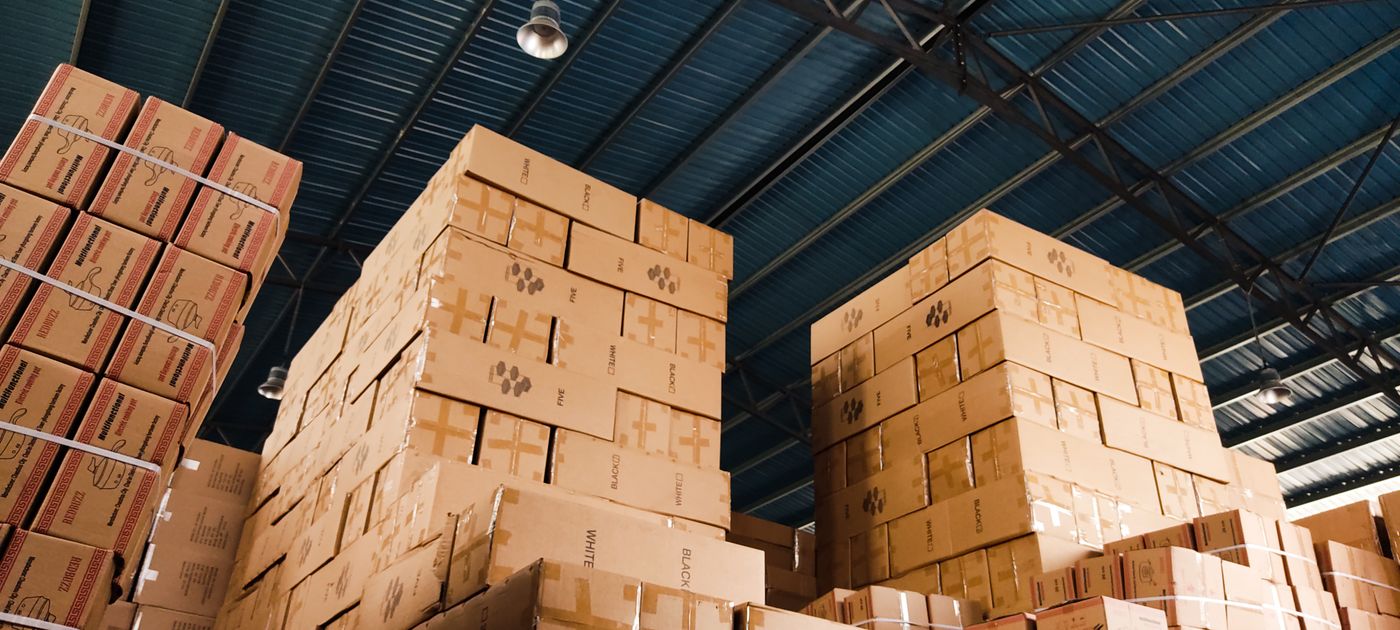
A warehouse manager can usually absorb the idea that there are cockroaches somewhere in a 40,000 square foot building. What tends to land differently is the follow-up question: how many of them left this week in a parcel. That is the thing that separates fulfilment from every other kind of storage — a conventional warehouse ships pallets to businesses that inspect them, while a fulfilment centre posts thousands of small boxes directly to consumers, so an infestation does not stay in your building, it gets distributed, at your expense, with somebody else’s brand on the label. This guide covers the three risks specific to the sector — inbound cardboard, the returns bay, and peak season — and what a programme looks like in a building that never stops picking.
Why is fulfilment different from a normal warehouse?
Storage risk in a conventional warehouse is contained. Goods arrive on pallets, sit, and leave on pallets to a business that has its own goods-in checks. If something is wrong, it is usually caught by somebody paid to catch it.
Fulfilment inverts that. The output is thousands of individually addressed small parcels going to private homes, where the recipient is not a quality inspector but a customer with a phone and a marketplace review field. One insect in one box is not a pest finding — it is a photograph, a refund, a marketplace ticket, and a very awkward call from the brand whose logo is on the carton.
Three consequences follow for the pest programme. Detection has to happen early in the flow, at goods-in and returns, rather than at the perimeter. Housekeeping around the pack bench matters disproportionately, because that is the last point anything can be intercepted. And your evidence has to be good enough to satisfy somebody else’s brand team, not just your own operations manager — because in a 3PL relationship, the audit comes from your client.
The number that changes the conversation. A warehouse with a contained cockroach problem has a cleaning issue. A fulfilment centre dispatching 4,000 parcels a day with the same problem has a distribution channel, and it is running at full capacity in the wrong direction.
Why is cardboard the whole problem?

Corrugated board is not just where pests hide. It is close to purpose-built habitat: dark, layered, insulating, slightly absorbent, and full of tight creases at exactly the dimensions a cockroach prefers to wedge itself into.
The specific mechanism matters. German cockroaches arriving on inbound cartons glue their egg cases into flap creases and corner folds. An ootheca is small, the colour of the board, and sits in a fold nobody opens — so it passes every stage of normal handling undetected, including the stage where the carton is broken down and its contents are put away. Unlike food shipments or livestock, cardboard is never inspected on arrival anywhere. In an operation measured on receiving throughput, it is the one high-volume input that goes straight to racking unchecked.
What actually works against it:
- Break down inbound cartons at goods-in, not at the pick face. Transferring stock to plastic totes at the boundary stops the vector at the door.
- Never store empty cardboard. Flatten and remove the same day. A stack of flattened board against a warm wall is a nursery, and it is present in almost every facility we survey.
- Keep board off the floor and away from walls where it must be held at all.
- Monitor at goods-in specifically, with numbered monitors near the receiving bays rather than only at the perimeter.
- Look at suppliers. Repeated finds traced to one inbound source is a supplier conversation, not a pest control one — and it is the single highest-value thing trend data will ever tell you.
What do returns bring back in?
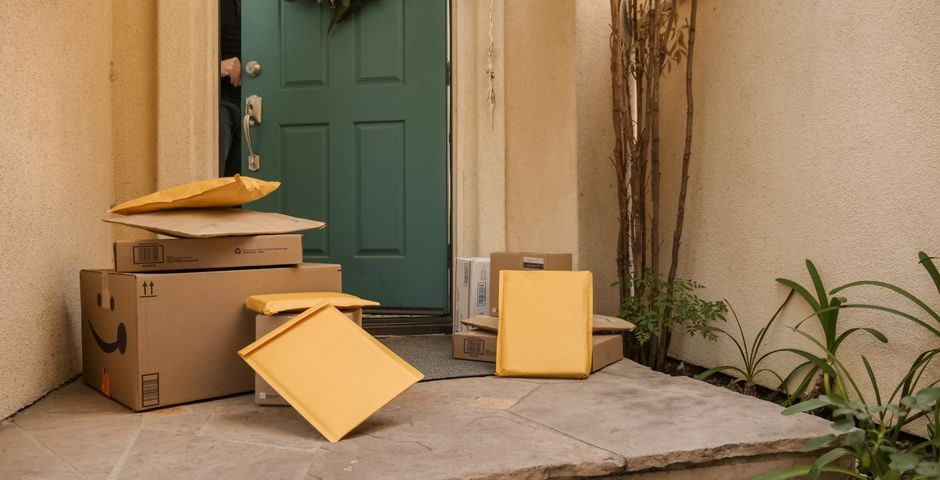
Reverse logistics is the least controlled inbound stream in the whole operation, and in most buildings it occupies a corner with no monitoring at all.
Think about what a returned parcel actually is. It has been opened. It has been repacked in whatever the customer had to hand, frequently a different box entirely. It has sat somewhere in a private home — very often a kitchen or a store room — for days or weeks. And it arrives back unlabelled as to contents, so nobody knows whether it holds a phone case or a leaking bottle of oil or an opened packet of biscuits.
Practical controls, none of them expensive:
- Treat returns as its own zone with its own numbered monitors, physically separated from good stock and from the pack bench.
- Process same day. A returns backlog is a pile of unknown organic material with dwell time, which is the only ingredient an infestation was missing.
- Open and inspect at a dedicated bench, and dispose of customer packaging immediately rather than reusing it.
- Quarantine anything food, pet food or damaged away from racking until it is disposed of or restocked.
- Never return-to-stock in the original customer carton. Repack into your own packaging every time.
A fulfilment operation in Shah Alam called us after two customers posted photos of cockroaches in delivered parcels — the sort of thing that reaches the brand owner before it reaches the warehouse manager. The racking was clean and the perimeter stations had caught almost nothing all year, which is why the previous reports looked fine. The population was in the returns corner: a two-week backlog of opened parcels stacked on the floor against a warm external wall, including several food items, plus a permanent stack of flattened cardboard next to it that was being kept “for reuse”. We baited the void behind the racking there, put numbered monitors into the returns and goods-in zones, and the operator moved returns onto a same-day rule with the board going out daily. It took about six weeks to go quiet and nothing has been reported by a customer since.
— Job notes, Nomobug field team
Which SKUs actually attract pests?
Mixed-SKU operations carry more risk than single-category ones, largely because nobody is tracking which pallet is the attractant. The usual suspects:
- Snacks, biscuits, instant noodles and dried goods. Obvious, and usually the ones people do watch.
- Pet food and treats. A serious rodent draw, frequently stored on low racking in bags that tear easily. Often the single highest-risk line in a general merchandise warehouse.
- Protein powders and supplements. High-value, high-attractant, and damaged tubs leak quietly.
- Rice, flour, grain and birdseed. These bring stored-product pests inside the sealed packaging — the infestation does not enter the building, it is delivered pre-installed.
- Beauty and personal care. Oils, waxes and balms are food to a cockroach, and leakage in this category is common.
- Anything already damaged. The damaged-goods cage is a food court with a fence around it if it is not cleared weekly.
If your stock includes food for sale, note that the Food Act 1983 and Food Hygiene Regulations 2009 apply to storage as well as to preparation — the fact that you are a logistics business rather than a food business does not exempt the goods.
What breaks during 11.11 and Raya?
Everything, briefly and predictably. It is why activity in this sector spikes after the peaks rather than during them — the conditions are created in November and the population is visible in December.
The failure pattern is consistent across sites:
- Temporary staff arrive without the housekeeping briefing. They are trained to pick and pack, and nobody mentions cardboard rules or the eating policy because there is no time.
- Overflow stock goes wherever it fits. Aisles, the returns corner, against external walls, in front of the stations that were carefully sited in March.
- Doors stay open for continuous loading, often all night.
- Waste outruns the collection schedule. Broken cases and packaging accumulate faster than the contracted bin frequency.
- Nobody opens a monitor. Service visits get postponed precisely when the risk is highest.
- Eating at the pack bench becomes normal during long shifts, and stays normal afterwards.
The fix is preparation, not heroics. Brief agency staff on the same two housekeeping rules as everyone else, agree in advance where overflow may and may not go, increase waste collection frequency for the period, and book the service visit for immediately after the peak rather than skipping it. That single scheduling decision prevents most of the January problems we get called to.
How do you treat a building that never stops picking?
By zone, with monitoring rather than blanket application — the same logic as a food plant, applied to a different floor layout.
- External perimeter. Numbered, locked, tamper-resistant rodent stations, mapped. This is the only place toxic bait belongs.
- Goods-in and docks. Monitors sited to catch the inbound vector, plus door seals, sweeps and strip curtains that are actually complete.
- Returns. Separate monitoring, because it is a separate risk with a separate cause.
- Racking and pick faces. Non-toxic monitoring, and targeted crack-and-crevice gel in voids and structure away from stock. No spraying over goods, ever.
- Pack bench and consumables. The last interception point, and worth a monitor of its own.
- Staff canteen, pantry, toilets and office. Where the German cockroach population usually actually lives, and the zone most often left out of the scope because it is not “operational”.
- Insect light traps at the docks and returns, sited away from the product path and never above open goods or the pack bench.
None of that requires stopping the operation. What it does require is access — a technician who can only work the perimeter because the aisles are full is producing a report, not a result.
“Hari tu rumah macam kena serang lipas kecik kecik. Stress kejap! Pasang perangkap je penuh. Pasang je penuh.”
— Hanis Zalikha (Instagram). A home rather than a warehouse, but it is the monitor lesson exactly. Traps that keep filling are not solving anything — they are telling you the population is established somewhere you have not looked. In a fulfilment centre that place is almost always goods-in or returns.
What do brand clients and marketplaces expect?
If you are a 3PL, your audit does not come from a regulator. It comes from the brand whose stock you hold, and brand owners have become noticeably less relaxed about this since parcel-level complaints started reaching them directly.
Expect to produce: a named pest control contract, a numbered device map tied to a site drawing, dated service reports per visit, trend analysis by device over time, and a corrective action log with root causes and closure dates rather than a column of “treated area”. Where the stock includes food, pet food or cosmetics, expect the questions to look a lot like a food manufacturer’s audit — because from the brand’s point of view, that is exactly what you are handling.
The documentation set is the same one we describe for plants and cold chain in managing pest risk in a food processing facility, and the contract clauses that make it enforceable are in what to put in a commercial pest control contract.
What does it cost?
| Site type | Typical market price | What drives it |
|---|---|---|
| Dark store or small unit under 2,000 sq ft | RM2,300 a year | Monthly schedule plus documentation |
| Fulfilment warehouse with docks and returns | Quoted per site | Floor area, dock count, device count, returns on site |
| Additional peak-season visit | Priced as a single visit | Scheduled immediately after 11.11 or Raya |
| Proofing (seals, sweeps, curtains, penetrations) | One-off, separate from the contract | Building fabric, quoted after survey |
For reference, Nomobug’s commercial pricing sits consistently around 10% below that typical market range — Annual Total Protection at RM2,090 a year for a premises below 2,000 sq ft, 15 visits (12 monthly plus 3 free), roughly RM139 a visit with the numbered device map and dated reports included. A single visit is RM290 and the 3-visit intensive over 14 days is RM490 where there is an active cockroach problem to clear first. Wider detail is in our commercial pest control price guide.
Worth setting against the alternative, since this sector has an unusually clear comparison. One customer photograph on a marketplace listing costs a refund, a return shipment, a ticket, and a place in the brand owner’s next review meeting. A dozen of them costs a contract. The annual programme is a rounding error next to a single lost 3PL client, which is the framing that tends to get this budget approved.



I’m giving him a 5-star rating.
Overall, from the last two visits, I found many spots/nests. The gel bait and Provcta were very impressive. The effect was very noticeable; the cockroaches were no longer visible in the kitchen. There were fewer in the living room. Today was my last visit for baiting and spraying. Hopefully, there will be no more cockroaches after this, God willing.
Highly recommended!



Nomobug has just completed their second service at my home, and once again I’m extremely impressed. They carried out contingency recurring control twice, especially targeting ants and cockroaches, and I really appreciate how they honor their warranty with such professionalism. The overall appointment scheduling and service management were smooth and reliable, which makes me feel very secure and well taken care of.
I’m very satisfied with the results and would highly recommend Nomobug to anyone looking for thorough pest control. Once my current contract finishes, I will definitely be renewing it.
It’s also worth highlighting that the same technician, Faris, has been consistently handling my house. He is punctual, polite, and highly professional. After completing the treatment, he provided a detailed report outlining his findings and preventive actions, even showing me examples of the control measures implemented. This level of transparency and care is rare, and I truly value it.
Overall, Nomobug continues to exceed my expectations—reliable, professional, and trustworthy.
4 MONTHS AGO:
I recently engaged Nomobug Servis Pest Control for a comprehensive treatment targeting cockroaches, ants, rats, common house geckos, and centipedes. They covered both the interior and exterior of my home—including my car—which was a huge plus.
The first service focused on prevention and control, and I was thoroughly impressed. The technician, Faris, was punctual, polite, and highly professional. He took the time to explain each step of the process—from inspection to recommending suitable control measures—and his work was exceptionally clean and tidy.
After completing the treatment, Faris provided a detailed report outlining his findings and the preventive actions taken and even showed me examples of the control measures implemented. I truly appreciated the transparency and care.
Overall, I’m very satisfied with their service and would confidently recommend Nomobug to anyone looking for reliable and thorough pest control.

Izzat handled it efficiently and professionally. Your quick response and technical skills really made the process smooth. Great teamwork and problem-solving!





Almost all places are sprayed.
Suggestions,
Hopefully the admin will send the same technician to work. Anyway, we are very satisfied with today’s service.
Thank you

We definitely add more services from them