★ 4.9 · 600+ Google reviewsBy Yusof Izzat, Lead Pest Control Technician · Updated 28 May 2026 · 10 min read

Termite pest control in Malaysia usually costs RM3,800 to RM6,500 for a corrective soil treatment, or roughly RM2,800 to RM6,500 for a termite baiting system that runs until the colony is destroyed — depending on the size of your house and how far the infestation has spread. This guide is only about termites — anai-anai — and covers what they’re actually doing under your house, how to spot them early, and what to ask before you sign anything.
Why Termites Are Their Own Problem
Most pests have the courtesy to announce themselves. A lipas runs across the floor. A tikus thumps around in the ceiling at 2am like it’s paying rent. Termites do none of that. They live underground, build little covered tunnels to get to your wood, and eat it from the inside out — leaving the paint and the surface looking perfectly fine.
By the time you actually notice them, the nest has usually been there for 3 to 5 years. Five years. Doing nothing all day except quietly eating the bones of your house. No rent, no warning, just commitment to the work.
That’s why termite work is quoted separately from general pest control. Different chemicals, different equipment, different way of thinking about the job. You’re not killing what you can see. You’re going after something underground that you can’t.
“Habis rosak perabot dekat rumah. Servis pest control anai-anai delivered by Nomobug. Terima kasih.”
— Jihan Muse. By the time the furniture starts going, the colony’s been working for years. That’s the case for an early inspection, not a late one.
The Anai-Anai That Matters in Malaysia
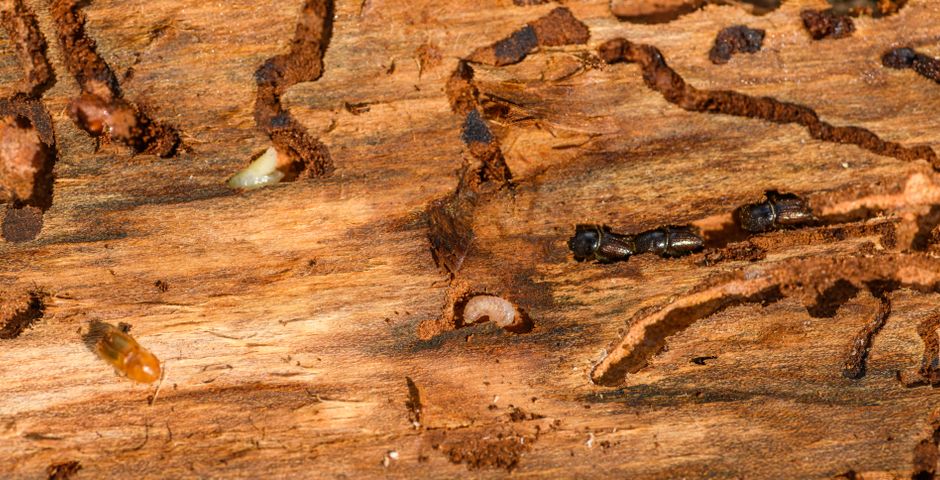
There are a few kinds of termites in Malaysia, but one does almost all the damage — the underground (subterranean) kind. Industry estimates put termite damage to Malaysian property at well over RM20 million a year. This one species is responsible for most of it.
The nest is underground, sometimes a few hundred metres from where the termites are actually feeding. A grown-up colony has anywhere from 100,000 to a million workers. The queen lays around 2,000 eggs a day. Every day. That’s her whole personality.
Foragers go out in every direction looking for wood — your skirting, your door frames, the roof trusses, parquet, and any wooden furniture sitting against a wall. The other two kinds of termite turn up occasionally. The drywood kind usually arrives inside second-hand furniture and nests in the timber itself, no soil contact needed. Dampwood termites need wet wood, which usually means you also have a leak. Both are way less common than the underground kind, and both need different treatments.
Four Signs You’ve Got Termites

Any one of these is enough reason to book a free inspection. You don’t need to wait for all four.
- Mud tubes — thin earth-coloured tunnels, about the width of a pencil, running up your exterior walls, on the foundation, or along the joists in your roof space. These are the covered roads termites build so they don’t dry out in the open. Crack one open. If something live wriggles out, you’ve got an active nest.
- Hollow-sounding wood — tap your skirting or door frame with a coin. Healthy wood gives you a sharp solid knock. Termite-eaten wood sounds like a hollow paper tube. The paint on the outside usually looks fine, which is the part that catches people out.
- Tiny wings on the floor — after the first heavy rain of the year, winged termites swarm out to start new colonies. They fly a bit, land, and drop their wings near windows, door frames, and ceiling lights. Small piles of identical clear wings on the floor are a really strong sign.
- Little pellet droppings (frass) — the size of a grain of salt, usually under wooden furniture or where a wall meets the ceiling. The drywood kind push these out of their tunnels. The underground kind don’t, but if you see frass, you’ve got a termite problem of some sort.
Don’t break the mud tubes if you’re planning to call. The technician would rather see them intact during the inspection — they show where the termites are coming in and how active the colony is. Take a photo, leave them alone, book the visit.
Last year in Bukit Jelutong, a homeowner called us in for a routine general pest visit. While we were checking the kitchen perimeter we found mud tubes running up behind the cabinet — caught in time, before any visible damage. Baiting stations installed that week, colony dead in four months, no drilling, no skirting repairs. That’s the value of early.
— Job notes, Yusof Amar, Nomobug Technician
The Two Treatments, Explained Properly

Two methods are licensed in Malaysia. Both work. They just get there differently.
Soil Treatment (the Chemical Barrier)
The technician drills small holes along the perimeter of your house and inside any affected rooms, then injects liquid termiticide into the soil. That chemical sits there and creates a treated zone the termites can’t cross without picking up a fatal dose.
The clever bit: the modern chemicals are designed so the termites don’t realise they’ve been poisoned. They walk through the treated soil, carry the chemical back to the nest on their bodies, and pass it to the others through grooming. The colony quietly dies out over a few weeks.
What’s good about it: fast, immediate barrier, lower upfront cost than baiting.
What’s not: someone has to drill holes through your tiles, the chemical stays in the soil for years, and the barrier only works where it’s been applied. Gaps become entry points.
Termite Baiting System (Until the Colony Is Destroyed)
Bait stations get installed at the affected areas around your house. The number depends on the perimeter and how active the infestation is. Each station holds cellulose laced with a slow-acting chemical that stops termites from moulting properly. Foragers find the bait, share it with the nest, feed it to the queen.
Here’s the important part: baiting isn’t a yearly subscription. We install the stations, refill the bait as it gets consumed, and keep the system running until the colony stops feeding — usually 2 to 4 months. Then we’re done. No ongoing annual contract.
What’s good about it: no drilling, no chemicals in your soil, complete colony kill. Great for finished homes with tiled floors.
What’s not: slower than soil treatment, the contract has to stay open until the colony is fully eliminated.
| Approach | Time to Kill the Colony | Total Cost (RM) | Best For |
|---|---|---|---|
| Corrective soil treatment | 1 to 4 weeks | 3,800 – 6,500 | Active infestation, fast response |
| Termite baiting system (until colony destroyed) | 2 to 4 months | 3,200 – 6,500 | Long-term protection, no drilling |
Before the House vs After the House
The cheapest termite work happens before your house is even built. The contractor pours termiticide into the foundation trenches and the soil under the slab, and that creates a continuous barrier under the whole building. It costs around RM2 to RM4 per square foot of built-up area — much cheaper than dealing with termites once they’re already inside.
Post-construction work is what most homeowners actually call about, because the house is already up and the termites have already moved in. The maths is brutal. A 1,500 sq ft terrace house treated before construction might cost RM3,000 to RM6,000 for years of protection. The same house, after termites arrive, costs RM3,800 to RM6,500 per round of corrective treatment — and may need follow-up.
If you’re buying a new build, ask whether pre-construction treatment was done, by which company, and whether the warranty transfers to you. Most developers in Malaysia include it. The paperwork doesn’t always make it to the buyer though.
What Termite Treatment Costs in Malaysia
Honest ranges for homes. Shops, factories, and warehouses are quoted differently — usually by the metre of perimeter plus the number of monitoring stations.
| Service | Property Type | Estimated Cost (RM) |
|---|---|---|
| Corrective soil treatment | Terrace house (post-construction) | 3,800 – 6,500 |
| Corrective soil treatment | Semi-D / bungalow | 5,500 – 9,500 |
| Baiting system (until colony destroyed) | Terrace house | 3,200 – 6,500 |
| Baiting system (until colony destroyed) | Semi-D / bungalow | 4,800 – 7,000 |
| Pre-construction soil treatment | Per sq ft of built-up | 2 – 4 |
| Spot treatment (one infested room) | Residential | 1,800 – 2,800 |
| Annual reinspection (under warranty) | Any | Usually free |
For reference, Nomobug’s termite baiting starts from RM2,800 and corrective soil treatment from RM3,600 (with a 3-year warranty) — at the lower end of these ranges. Quotes well below the table are a red flag: termite chemicals are expensive, and undercutting usually means watered-down product or fewer drill points.
Warranties — What They Actually Cover
The warranty is most of what you’re paying for after the first job. A soil treatment without a warranty is just a one-time spray. A baiting contract without a clear end-condition is just paying for someone to walk around your garden every quarter.
Standard warranty terms in Malaysia:
- Corrective soil treatment: usually 12 months on the basic package. Premium chemicals stretch the warranty to 3 to 5 years. If termites come back inside that period, the company returns and re-treats for free.
- Termite baiting system: active monitoring continues until the colony is destroyed. Most operators include re-installation if a new colony shows up within 12 months of the original kill.
- Pre-construction: 5 to 10 years from the original contractor — usually voided if anyone makes structural changes later.
Three questions to ask before you sign any warranty: what triggers a free retreatment, what voids the warranty, and whether the reinspection is automatic or you have to chase them for it.
When It’s Not Termites at All
Not every wood problem is a termite problem. A meaningful chunk of “termite” callouts in Malaysia turn out to be one of the following — none of which need termite treatment. If your auntie asks why you called pest control, blame the drains. That’s a different post.
- Wet rot (fungal damage) — dark, soft, often damp wood with no mud tubes and no live insects. It’s caused by water, not termites. The fix is finding and repairing the leak, then replacing the wood.
- Carpenter ants — they tunnel inside wood too, but the galleries are smooth and clean with sawdust outside, no soil. Different bug, completely different treatment.
- Wood beetles — small round exit holes in wood with very fine flour-like dust around them. Common in untreated hardwood furniture from second-hand shops.
- Old wood just ageing — splits, shrinkage, surface cracking. Particularly tropical hardwoods that have been through years of swinging humidity. No insects involved at all.
If you’re not sure, the free inspection costs you nothing and might save you from paying for termite work you don’t actually need. We will tell you when it isn’t termites — that conversation happens regularly, and we’d rather have it than sell you something that won’t help.
How to Pick a Termite Specialist

Before you book anyone, ask for these four things. A real company hands them over without making it weird.
- Written quote — scope of work, product name, application method, total cost, warranty terms. Anything verbal isn’t binding.
- Safety Data Sheet — for the specific chemical they’re going to use. Tells you the active ingredient, how long it stays in the soil, and the re-entry time.
- Free inspection before quoting — anyone who gives you a fixed termite price over the phone without seeing your place is guessing. The price changes by hundreds of ringgit depending on your perimeter, your soil, and how many internal walls need drilling.
- Warranty in writing — what’s covered, what voids it, and whether the reinspection is automatic. Verbal promises about future re-treatments aren’t enforceable.
For broader pest stuff, see our guides to pest control in Selangor and our termite protection service. For a quote on your specific place, book a free inspection through our contact page.
A recent call in Kajang — homeowner had been DIY-spraying around the skirting for almost a year. He called us the day a section of door frame came off in his hand. Active subterranean colony, full corrective soil treatment, six months of monitoring before we signed it off. The job would have been a baiting contract a year earlier. It became a structural one because nobody inspected.
— Job notes, Yusof Izzat, Nomobug Lead Pest Control Technician


Raja Rethnam
2 months ago
Hi, i WhatsApp for assistance, Great, trying to help effectively ,tq👍

nur hidayah Yusoff
2 months ago
Hafiz’s service was excellent, efficient, and well-organized, covering every critical location from the kitchen, toilet, bedroom, and living room. He explained the function of gel bait and Provcta.
I’m giving him a 5-star rating.
Overall, from the last two visits, I found many spots/nests. The gel bait and Provcta were very impressive. The effect was very noticeable; the cockroaches were no longer visible in the kitchen. There were fewer in the living room. Today was my last visit for baiting and spraying. Hopefully, there will be no more cockroaches after this, God willing.
Highly recommended!
I’m giving him a 5-star rating.
Overall, from the last two visits, I found many spots/nests. The gel bait and Provcta were very impressive. The effect was very noticeable; the cockroaches were no longer visible in the kitchen. There were fewer in the living room. Today was my last visit for baiting and spraying. Hopefully, there will be no more cockroaches after this, God willing.
Highly recommended!

Nurul Najihah
2 months ago
Best service. From the many cockroaches, now it has reduced and is cockroach-free. All the staff are nice and efficient

Iffah Ahmad
2 months ago
Good explanation from Encik Izzat… Clear and satisfied with the service provided.

Raja Yana Meleessa Raja Haroon Arashid
3 months ago
UPDATE REVIEW:
Nomobug has just completed their second service at my home, and once again I’m extremely impressed. They carried out contingency recurring control twice, especially targeting ants and cockroaches, and I really appreciate how they honor their warranty with such professionalism. The overall appointment scheduling and service management were smooth and reliable, which makes me feel very secure and well taken care of.
I’m very satisfied with the results and would highly recommend Nomobug to anyone looking for thorough pest control. Once my current contract finishes, I will definitely be renewing it.
It’s also worth highlighting that the same technician, Faris, has been consistently handling my house. He is punctual, polite, and highly professional. After completing the treatment, he provided a detailed report outlining his findings and preventive actions, even showing me examples of the control measures implemented. This level of transparency and care is rare, and I truly value it.
Overall, Nomobug continues to exceed my expectations—reliable, professional, and trustworthy.
4 MONTHS AGO:
I recently engaged Nomobug Servis Pest Control for a comprehensive treatment targeting cockroaches, ants, rats, common house geckos, and centipedes. They covered both the interior and exterior of my home—including my car—which was a huge plus.
The first service focused on prevention and control, and I was thoroughly impressed. The technician, Faris, was punctual, polite, and highly professional. He took the time to explain each step of the process—from inspection to recommending suitable control measures—and his work was exceptionally clean and tidy.
After completing the treatment, Faris provided a detailed report outlining his findings and the preventive actions taken and even showed me examples of the control measures implemented. I truly appreciated the transparency and care.
Overall, I’m very satisfied with their service and would confidently recommend Nomobug to anyone looking for reliable and thorough pest control.
Nomobug has just completed their second service at my home, and once again I’m extremely impressed. They carried out contingency recurring control twice, especially targeting ants and cockroaches, and I really appreciate how they honor their warranty with such professionalism. The overall appointment scheduling and service management were smooth and reliable, which makes me feel very secure and well taken care of.
I’m very satisfied with the results and would highly recommend Nomobug to anyone looking for thorough pest control. Once my current contract finishes, I will definitely be renewing it.
It’s also worth highlighting that the same technician, Faris, has been consistently handling my house. He is punctual, polite, and highly professional. After completing the treatment, he provided a detailed report outlining his findings and preventive actions, even showing me examples of the control measures implemented. This level of transparency and care is rare, and I truly value it.
Overall, Nomobug continues to exceed my expectations—reliable, professional, and trustworthy.
4 MONTHS AGO:
I recently engaged Nomobug Servis Pest Control for a comprehensive treatment targeting cockroaches, ants, rats, common house geckos, and centipedes. They covered both the interior and exterior of my home—including my car—which was a huge plus.
The first service focused on prevention and control, and I was thoroughly impressed. The technician, Faris, was punctual, polite, and highly professional. He took the time to explain each step of the process—from inspection to recommending suitable control measures—and his work was exceptionally clean and tidy.
After completing the treatment, Faris provided a detailed report outlining his findings and the preventive actions taken and even showed me examples of the control measures implemented. I truly appreciated the transparency and care.
Overall, I’m very satisfied with their service and would confidently recommend Nomobug to anyone looking for reliable and thorough pest control.

Ann
6 months ago
Appreciate izzat help in clearing the bug.
Izzat handled it efficiently and professionally. Your quick response and technical skills really made the process smooth. Great teamwork and problem-solving!
Izzat handled it efficiently and professionally. Your quick response and technical skills really made the process smooth. Great teamwork and problem-solving!

Roger Banat
8 months ago
The staffs are very friendly and helpful. They willing to explain further if any questions I am asking. Highly recommended. Importantly, the cockroaches issue has been resolved.

Isma Dasiuk
9 months ago
I’ve come across this company on Facebook and they have responded very promptly and professionally. They keep following up from time to time until I was free to engage their service. I like the persistence. I bought the RM490 package and they came 3 times over the period of 3 months. Now my house has no more cockroaches at all! I am so impressed. Their service is also very atas and staff all friendly and professional. I would recommend anyone looking for pest control service to use this company. This is not a paid ad, I’m really a genuine client who actually did use their service. Please contact me on my Google account if you need to ask more questions.

Nur Ammira Haris
11 months ago
Staff named Izzat carries out their duties meticulously

Ilya Suhaidi
11 months ago
The explanation given was good and the process was smooth and thorough too. Highly recommend

Mahsuri Ahmad
12 months ago
Best service….many advices and suggestions given to overcome cockroach breeding problems.
Almost all places are sprayed.
Suggestions,
Hopefully the admin will send the same technician to work. Anyway, we are very satisfied with today’s service.
Thank you
Almost all places are sprayed.
Suggestions,
Hopefully the admin will send the same technician to work. Anyway, we are very satisfied with today’s service.
Thank you

Nur Izzati
12 months ago
Customer service was really good. Cockroaches are noticeably dwindling.
We definitely add more services from them
We definitely add more services from them

Putranda Ruslan
12 months ago
Detailed inspection. All the hot spots have set traps for the roaches, here’s hoping it’ll work.

Wan Hasitinaziah
12 months ago
The service provided by Nomobug technicians is good. All technicians who come are very ethical and careful. Provide explanations every time before starting the service. For improvement, it is hoped that there will be no manholes ‘overlooked’ in the first service. Because this will affect the quality of Nomobug services and the cockroaches will still be there. Thank you.

Ts. Mohd Ashraf Hj. Ahmad Fauzi
12 months ago
A good experience.your staff (Faris) has dine a great job in explaining the Dos n Don’t s to improve my house conditions.

ng Rong
12 months ago
Very detailed and very professional! Highly recommend this company! If anyone is looking for pesticide for their house.. please consider them so attentive and first session don’t see any of those nuisance insects!

Muhammad Rusydi
1 year ago
The best, after doing it once a lot of cockroaches come out and it seems to have decreased. Waiting for the results for the second & last session.

Hazimah Ahmad
1 year ago
Good service

Lim Desmond
1 year ago
Professional service. Can see the difference before and after.

Lo Bell
1 year ago
The service is good, and the staff is also ok. Every corner is sprayed with medicine.

Azarini Abidin
1 year ago
En Faiz was very professional and knowledgeable. He came on time, explained in detail and did everything in a flash. Awesome service! Hope to get En Faiz if i have pest problem again in the furure.

Redzuan Redza
1 year ago
Great service! The personnel assigned was very courteous and thorough in his work. He explained and walked through the whole process clearly and and answered questions that we had satisfactorily. Would not hesitate to recommend their service! 👍🏼

Afiq Zamanhuri
2 years ago
The service is great. I rented an apartment beside waste chamber, for 2 years being spraying consistently but to no avail. But this service clear the root problem by give bait to main points around the house so that even the little ones baited.

imran hazim
2 years ago
Encik Y.. is an honest guy, spray all 3 storey house inside and outside and has a quarter of content spray bottle. Deducting 1 star for late arrival.

mohd suhaimi
2 years ago
Very good service

Intan Zakaria
2 years ago
Yusup was really helpful and professional and he went an extra mile to remove a dead bird from thr ceiling.

Sabreena Khad
2 years ago
Very friendly and clear instructions was given before the procedure.

Yati Yati
2 years ago
Satisfied with service given. Explanation given by the staff.

syahieda che mid
2 years ago
Spray Provecta – really effective…

Ungku Z
2 years ago
Hospitality. Arrive on time for the appointment. Satisfactory service

Iman Zairul
2 years ago
My first time using pest control. Managed to remove ants for 1 year . Im using them again

Farida Aswan
2 years ago
They are very knowledgeable about all types of pests and also very helpful. The technician even helped me spray lizard repellent inside and outside my house because I was really afraid of them. I’m very happy with the service they provided.

nur afiqah kamaruddin
2 years ago
I’ve been using nomobug service ie: general pest control for our house since VP. Good service with atrractive promo deals.

Yong Han Chung
2 years ago
Best service, the technician was very helpful and friendly. They did a wonderful job and gave me reassurance that the cockroaches will not come back anymore. Most importantly they used chemicals that are not dangerous to children ! Would recommend this service especially for families

amir arshad
3 years ago
Is my 2nd time after more than a year if not mistaken. Had experience with many companies before but doesn’t take too long the ants come again for like few weeks until i found them.Good service, effective and will consider to subscribe their service in future .Good explanation by their staff yuvan. 👍🏻👍🏻👍🏻👍🏻👍🏻

zarina manan
3 years ago
All good very efficient..appointment in time .. thank you for the service